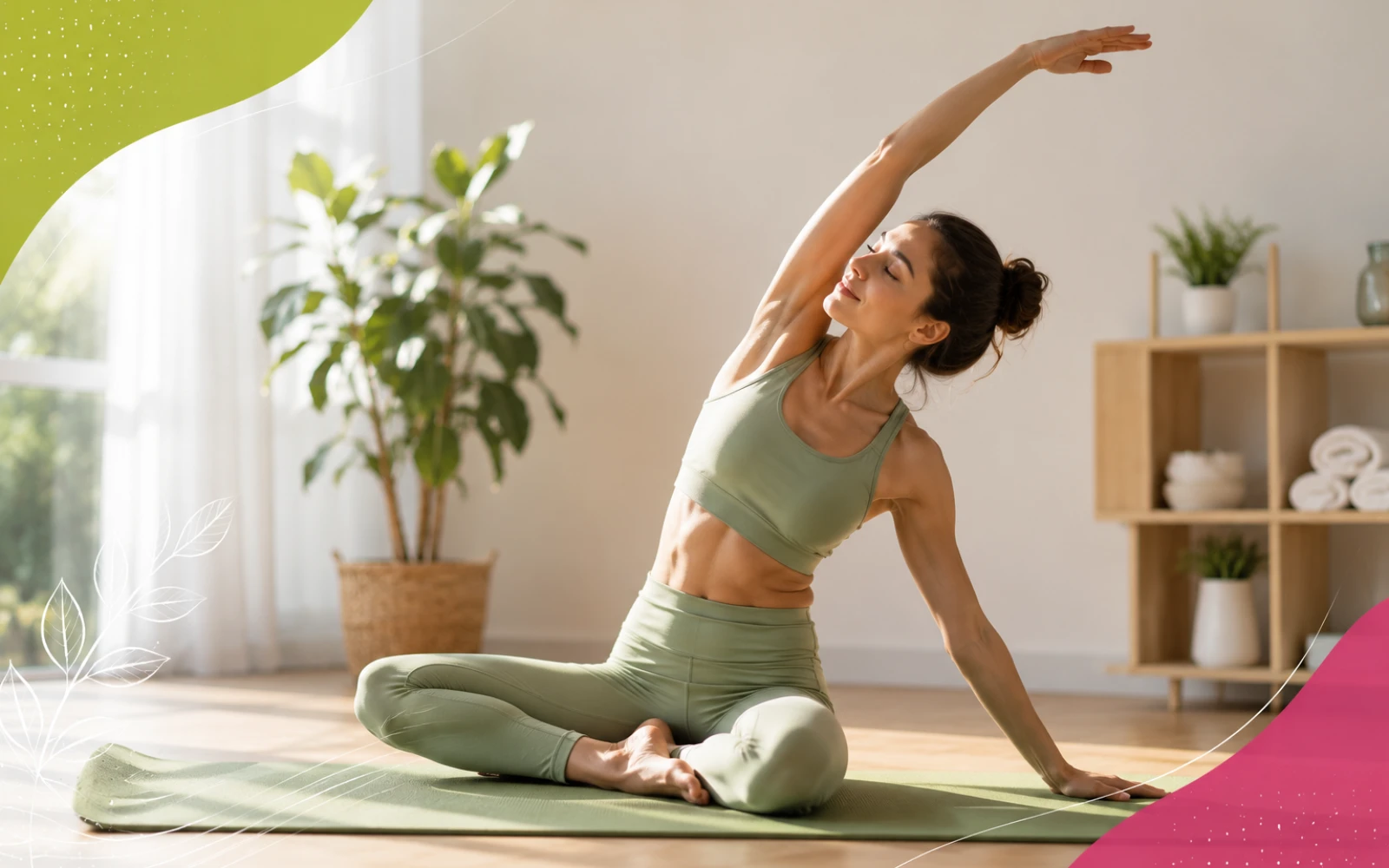
Morning stretching is one of the easiest ways to wake up the body, improve mobility, and prepare for the day ahead. Just a few minutes of gentle movement each morning can help reduce stiffness after sleep, improve flexibility, and promote better posture throughout the day.
Unlike intense workouts, stretching is suitable for nearly everyone regardless of age or fitness level. It requires no equipment, can be performed at home, and is easy to incorporate into an existing morning routine.
In this guide, you'll learn why stretching is important, the benefits of morning mobility, a simple full-body stretching routine, how stretching supports better posture, and practical tips for building a consistent flexibility habit.
▹ Why stretching is important
During sleep, muscles remain relatively inactive for several hours. Gentle stretching helps increase circulation, improve joint mobility, and prepare muscles for normal daily movement. Regular flexibility exercises may also contribute to better movement efficiency and greater physical comfort.
| Reason | Benefit |
|---|---|
| Improves circulation | Helps deliver oxygen and nutrients throughout the body. |
| Reduces stiffness | Supports easier movement after waking up. |
| Enhances flexibility | Maintains comfortable range of motion. |
| Prepares muscles | Gets the body ready for daily activities. |
| Supports posture | Encourages better body alignment. |
▹ Benefits of morning mobility
Morning mobility exercises combine gentle stretching with controlled movement. This combination helps loosen tight muscles while encouraging better coordination and balance throughout the day.
| Benefit | How It Helps |
|---|---|
| Greater flexibility | Improves comfortable movement. |
| Higher energy | Helps wake up the body naturally. |
| Better posture | Encourages proper alignment. |
| Improved mobility | Supports healthy joints and muscles. |
| Reduced muscle tension | Promotes physical relaxation. |
▹ Full-body stretching routine
A complete morning stretching routine should gently activate the entire body without causing discomfort. Move slowly, breathe naturally, and never force a stretch beyond a comfortable range.
| Exercise | Target Area | Suggested Time |
|---|---|---|
| Neck stretch | Neck and shoulders | 30 seconds |
| Shoulder rolls | Upper back | 30 seconds |
| Cat-Cow stretch | Spine | 1 minute |
| Standing hamstring stretch | Back of legs | 30 seconds each side |
| Hip flexor stretch | Hips | 30 seconds each side |
| Calf stretch | Lower legs | 30 seconds each side |
| Chest opener | Chest and shoulders | 30 seconds |
▹ How stretching improves posture
Many daily activities involve prolonged sitting, computer work, or looking down at mobile devices. These habits can contribute to muscle tightness and poor posture. Regular stretching helps maintain flexibility in muscles that commonly become shortened while encouraging balanced movement patterns.
| Common Issue | Helpful Stretch |
|---|---|
| Rounded shoulders | Chest opener |
| Tight hips | Hip flexor stretch |
| Lower back stiffness | Cat-Cow stretch |
| Tight hamstrings | Standing hamstring stretch |
| Neck tension | Gentle neck stretch |
▹ Creating a daily flexibility habit
The greatest benefits of stretching come from consistency rather than intensity. Even spending five to ten minutes every morning can help improve mobility, reduce stiffness, and make stretching a natural part of your healthy lifestyle.
Choose a routine that fits your schedule and focus on performing each movement slowly and with control. Over time, regular stretching becomes easier to maintain and can support long-term physical function.
| Daily Habit | Benefit | Suggested Time |
|---|---|---|
| Stretch after waking up | Helps prepare the body for movement. | 5–10 minutes |
| Practice deep breathing | Encourages relaxation during stretching. | Throughout the routine |
| Stretch consistently | Supports gradual flexibility improvements. | Daily |
| Move slowly | Improves control and comfort. | Every exercise |
| Stay hydrated | Supports overall physical function. | Before or after stretching |
▹ Weekly stretching recommendations
Although a short routine each morning is beneficial, flexibility can also be improved by including a few longer mobility sessions during the week. These sessions allow additional time to focus on tight muscle groups and overall movement quality.
| Frequency | Recommendation |
|---|---|
| Daily | 5–10 minutes of gentle morning stretching. |
| 2–3 times per week | 20–30 minutes of full-body flexibility training. |
| After workouts | Stretch major muscle groups while muscles are warm. |
| Rest days | Perform light mobility exercises to stay active. |
▹ Common stretching mistakes
Stretching should feel comfortable rather than painful. Many beginners try to force movements too quickly or bounce during stretches, which may increase discomfort instead of improving flexibility.
| Mistake | Better Approach |
|---|---|
| Stretching too aggressively | Move only within a comfortable range. |
| Bouncing during stretches | Use slow, controlled movements. |
| Holding your breath | Maintain slow, steady breathing. |
| Skipping warm-up movement | Begin with gentle mobility exercises. |
| Being inconsistent | Practice regularly instead of occasionally. |
▸ Frequently Asked Questions
How long should a morning stretching routine be?
For most people, 5–10 minutes is enough to improve mobility, reduce stiffness, and prepare the body for the day.
Is it better to stretch before or after exercise?
Gentle dynamic stretching is often used before activity, while longer static stretches are commonly performed after exercise when muscles are warm.
Can stretching improve posture?
Regular stretching may help improve flexibility and mobility, making it easier to maintain healthy posture throughout the day.
Should stretching ever be painful?
No. Stretching should create mild tension but should never cause sharp pain. Gentle, controlled movements are generally recommended.
Can daily stretching support healthy aging?
Regular stretching helps maintain flexibility, mobility, balance, and comfortable movement, making it an excellent long-term habit for supporting an active lifestyle.
Morning stretching is a simple habit that can help improve flexibility, increase mobility, and prepare your body for the day ahead. Just a few minutes of gentle movement each morning may support better posture, reduce muscle stiffness, and contribute to long-term physical well-being. Combined with regular exercise, balanced nutrition, quality sleep, and healthy daily habits, stretching can become an important part of an active lifestyle and healthy aging routine.
The Best Morning Stretching Routine to Boost Energy and Flexibility