Walking is one of the simplest and most effective forms of physical activity for people of all ages. It requires no expensive equipment, can be done almost anywhere, and fits easily into most daily routines. Regular walking supports cardiovascular health, helps maintain mobility, and contributes to overall well-being.
Unlike high-intensity workouts, walking places relatively little stress on the joints while still providing meaningful health benefits. Whether you enjoy a brisk morning walk, an afternoon stroll, or an evening walk after dinner, every step contributes to a healthier lifestyle.
This guide explains why walking is considered one of the best exercises, its health benefits, how many steps you may need, and practical strategies for building a consistent daily walking habit.
▹ Why walking is one of the best exercises
Walking is a natural movement that engages multiple muscle groups while improving circulation and supporting overall physical fitness. It is suitable for beginners, older adults, and experienced exercisers alike because the intensity can easily be adjusted to individual fitness levels.
| Why Walking Is Effective | Benefit |
|---|---|
| Low-impact activity | Gentle on the joints while remaining effective. |
| Easy to access | No gym membership or special equipment required. |
| Suitable for most ages | Can be adapted to different fitness levels. |
| Supports daily movement | Encourages a more active lifestyle. |
| Easy to maintain | Simple to include in everyday routines. |
▹ Health benefits of daily walking
Regular walking offers benefits that extend beyond physical fitness. Consistent movement may help improve mood, increase daily energy, and support healthy aging by encouraging better cardiovascular function and overall mobility.
| Benefit | How Walking Helps |
|---|---|
| Heart health | Supports healthy circulation and cardiovascular fitness. |
| Weight management | Helps increase daily calorie expenditure. |
| Mental well-being | May reduce stress and improve mood. |
| Bone and joint health | Encourages regular movement and mobility. |
| Healthy aging | Supports independence and physical function over time. |

▹ How many steps do you really need?
There is no single number that works for everyone. While 10,000 steps per day is a popular goal, research suggests that health benefits can begin with fewer steps depending on age, fitness level, and overall activity. The most important goal is to move consistently.
| Daily Step Goal | Who It May Suit | Main Focus |
|---|---|---|
| 4,000–6,000 | Beginners | Build consistency. |
| 6,000–8,000 | Most adults | Increase daily activity. |
| 8,000–10,000 | Active individuals | Support overall fitness. |
| 10,000+ | Higher activity goals | Maintain an active lifestyle. |
▹ Walking for heart health and weight management
Walking at a comfortable but brisk pace can help elevate your heart rate while remaining sustainable for longer periods. Combined with balanced nutrition and adequate sleep, daily walking can become an important part of a healthy weight management plan and long-term cardiovascular wellness.
| Walking Habit | Potential Benefit |
|---|---|
| Morning walk | Helps start the day with movement and energy. |
| Walking after meals | Encourages regular daily activity. |
| Brisk walking | Provides moderate cardiovascular exercise. |
| Walking outdoors | Combines movement with fresh air and nature. |
| Walking with friends | Supports motivation and consistency. |
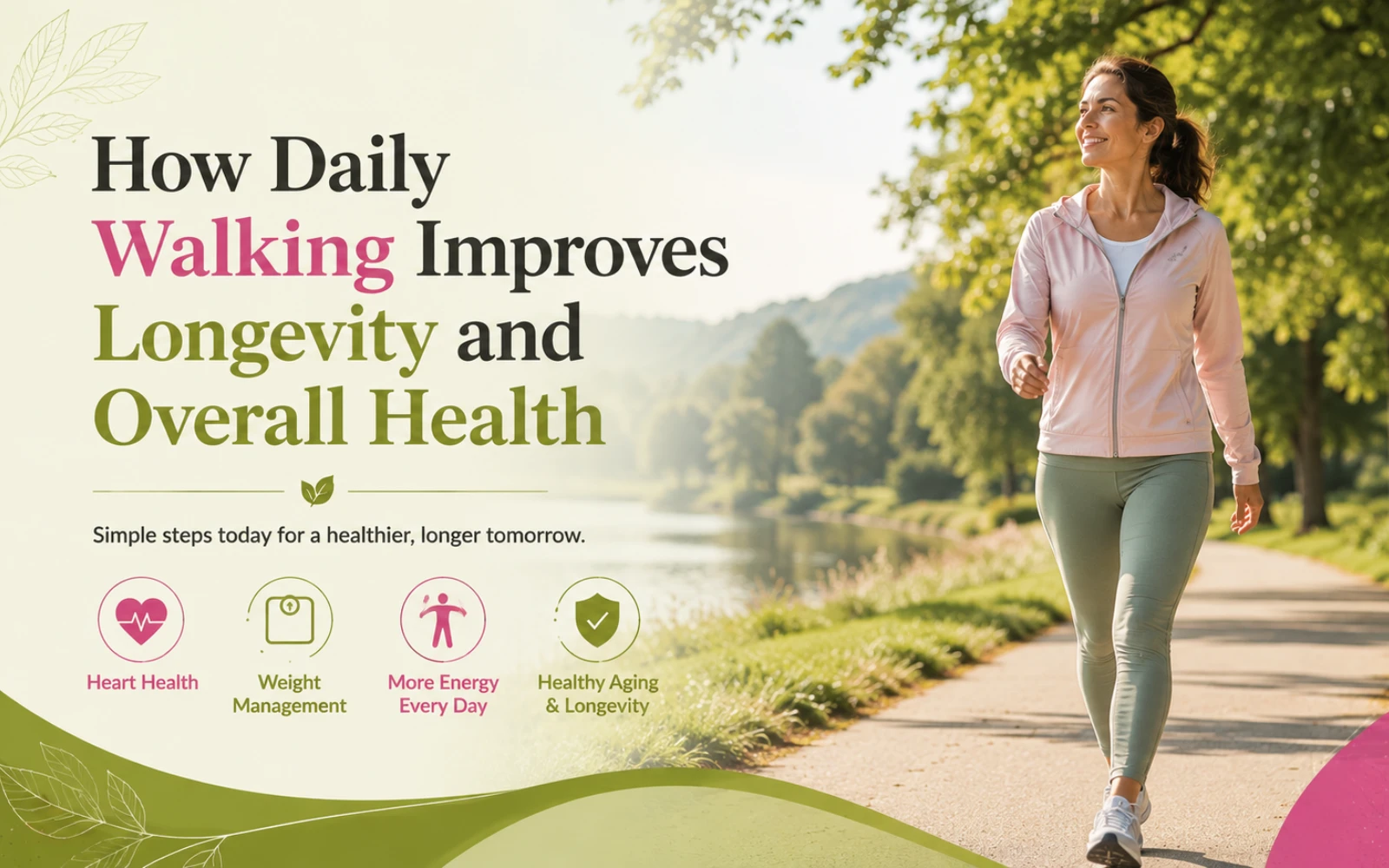
How Daily Walking Improves Longevity and Overall Health