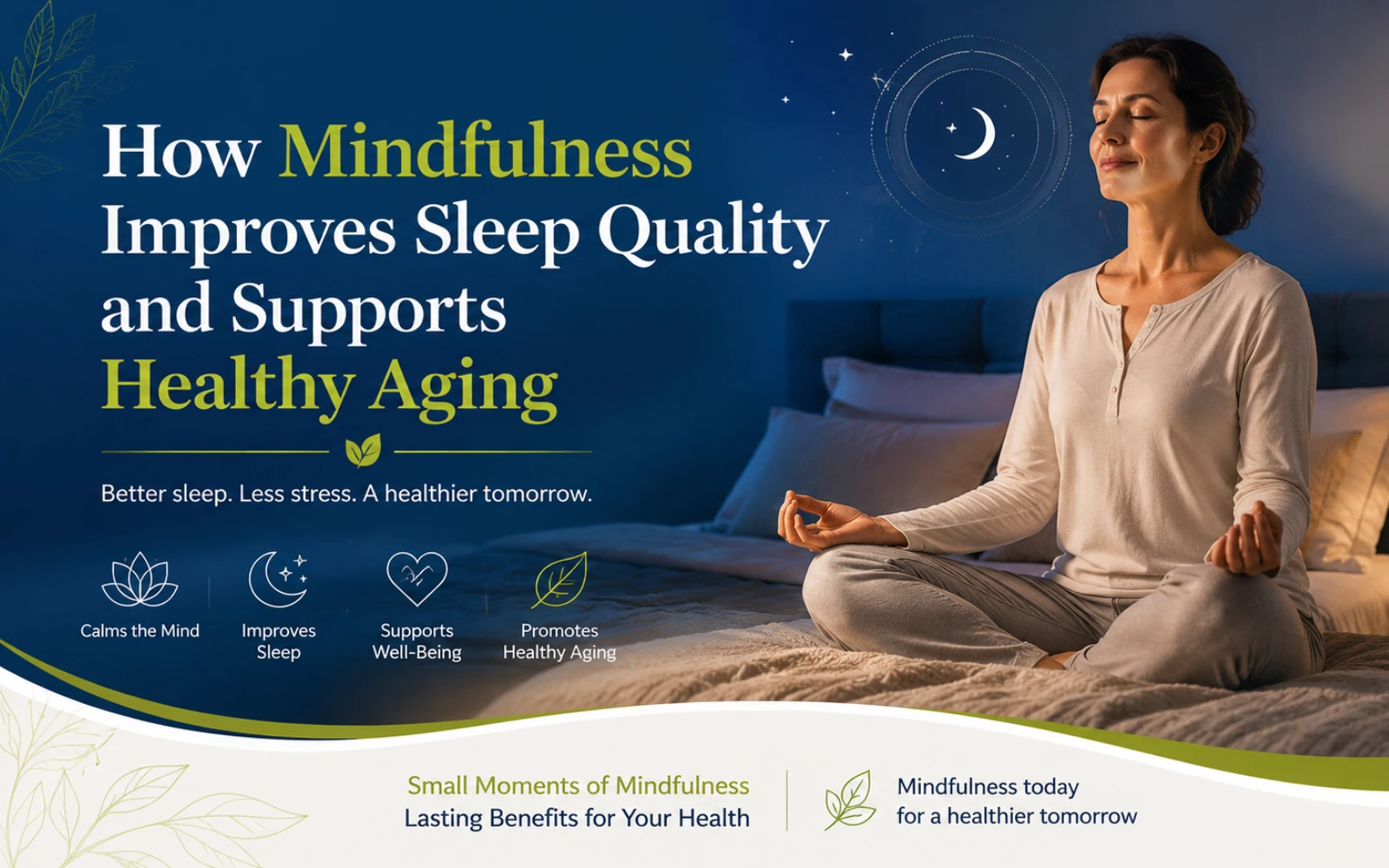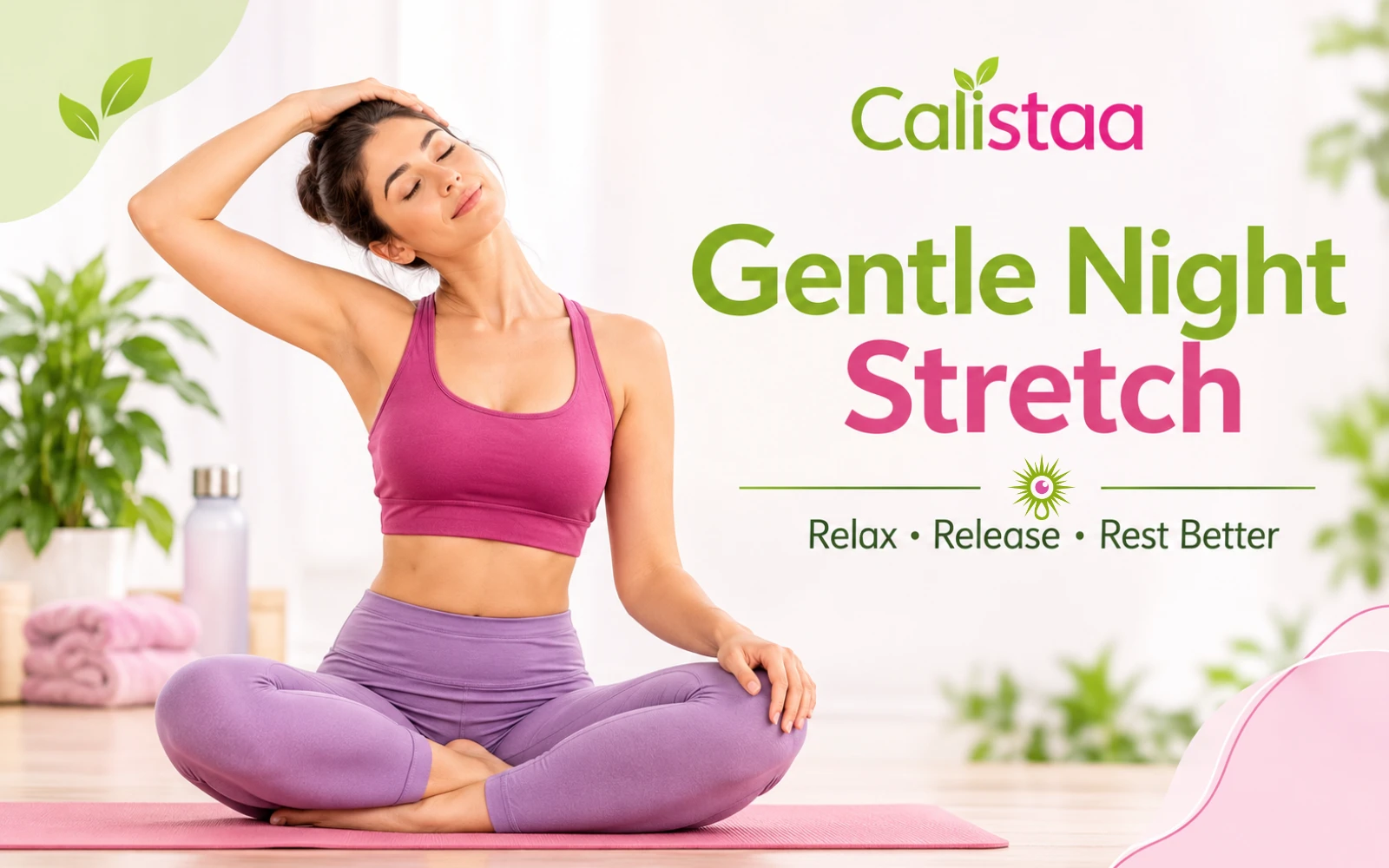
A busy day can leave your body feeling stiff, tense, and ready for a little extra care. A gentle evening stretching routine is a simple way to slow down, release everyday tension, and create a calmer transition between daytime activities and bedtime.
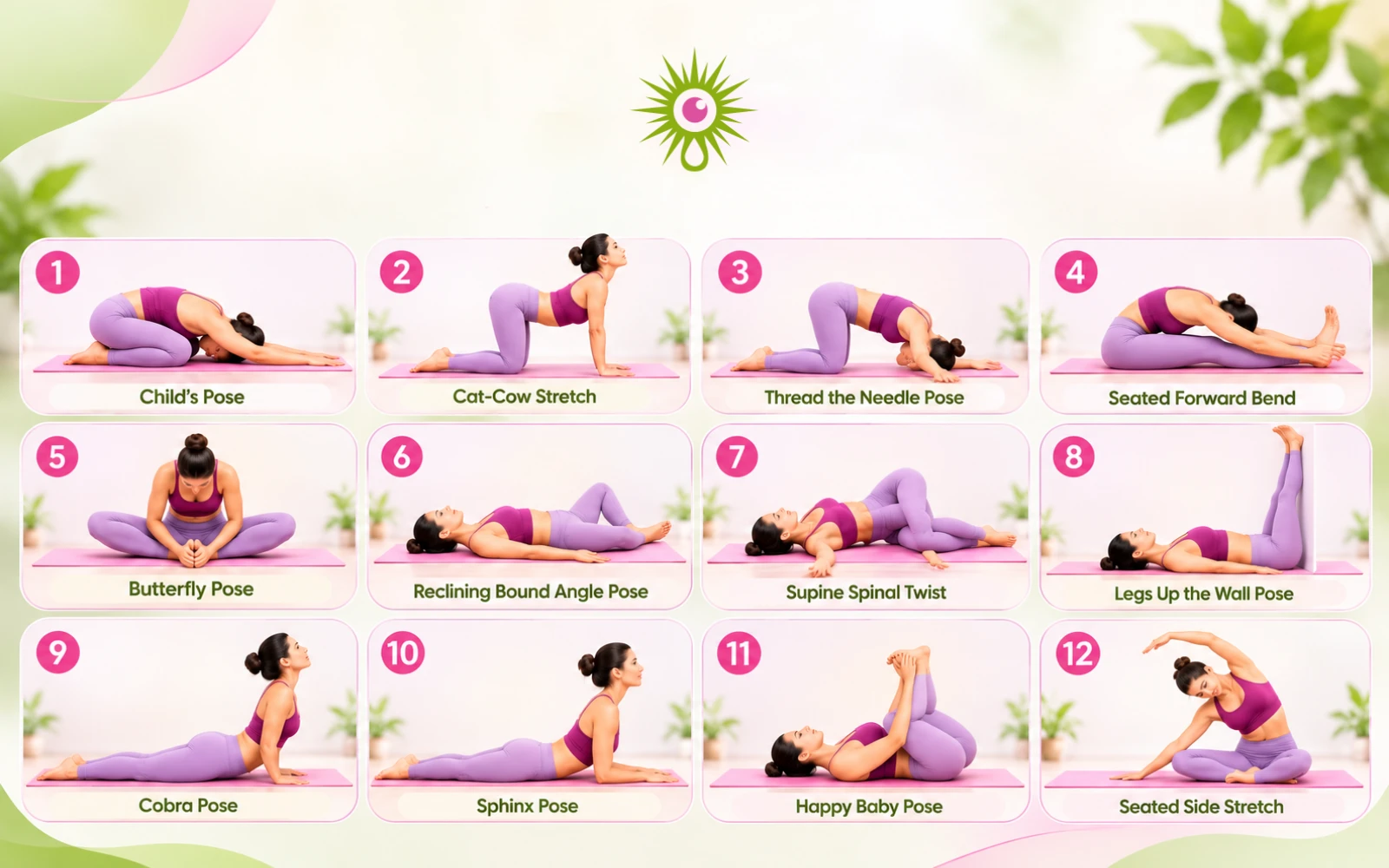
Gentle Night Stretch is a relaxing sequence of 12 beginner-friendly yoga poses designed to stretch different areas of the body, including the neck, shoulders, back, hips, and legs. The movements are slow and controlled, making this routine suitable for a quiet evening at home.
You do not need special equipment or advanced yoga experience. A comfortable yoga mat, a little space, and a few minutes of uninterrupted time are enough to get started. Move at your own pace, breathe naturally, and focus on comfortable movement rather than achieving a deep stretch.
▹ Why Try a Gentle Night Stretch Routine?
Gentle stretching can help maintain flexibility, support comfortable joint movement, and reduce the feeling of stiffness after long periods of sitting or standing. An evening routine can also become a useful relaxation habit that encourages you to pause and pay attention to how your body feels.
Slow yoga movements combined with comfortable breathing may help you feel more relaxed before bedtime. Although stretching is not a treatment for insomnia or other sleep disorders, it can be a pleasant part of a consistent evening wind-down routine.
- Relaxation: Slow movements can create a peaceful transition from daily activities to rest.
- Flexibility: Regular gentle stretching helps maintain comfortable movement.
- Back and shoulder comfort: Selected poses gently move and stretch areas that may feel stiff after sitting.
- Hip mobility: Seated and reclined positions provide opportunities to stretch the hips and inner thighs.
- Body awareness: Paying attention to breathing and movement can help you recognize areas of tension.
- Consistency: A short routine is easier to maintain than an elaborate workout when you are preparing for bed.
▹ Before You Begin
Choose a quiet, comfortable space and place your yoga mat on a stable, nonslip surface. Wear clothing that allows you to move freely. If your knees, hips, or lower back need additional support, keep a folded blanket or cushion nearby.
Move slowly between positions and avoid forcing your body into a stretch. You should feel a mild pulling sensation, not sharp pain, numbness, tingling, or pressure in your joints.
For this routine, try holding each comfortable position for approximately 20–40 seconds. For poses involving repeated movement, such as Cat-Cow, perform 5–8 slow repetitions. You can shorten or extend the routine depending on your comfort and experience.
▹ 12 Gentle Night Stretch Yoga Poses
1. Cat-Cow Stretch (Marjaryasana-Bitilasana)
Focus: Spine, shoulders, and back mobility.
Cat-Cow is a gentle movement sequence that helps warm up the spine and prepare your body for the rest of the routine.
- Start on your hands and knees with your wrists beneath your shoulders and knees beneath your hips.
- Inhale as you gently lower your belly, lift your chest, and look slightly forward.
- Exhale as you round your back, draw your abdomen inward, and gently lower your head.
- Continue alternating between the two positions with slow, comfortable breathing.
Repeat 5–8 times without rushing. Keep the movement smooth and avoid forcing your neck into either position.
2. Thread the Needle Pose (Parsva Balasana)
Focus: Upper back, shoulders, and the area between the shoulder blades.
This gentle twisting stretch can help release stiffness around the upper back and shoulders.
- Begin on your hands and knees.
- Slide your right arm underneath your left arm, bringing your right shoulder and the side of your head toward the mat.
- Keep your hips comfortably lifted and supported above your knees.
- Rest in the position and breathe slowly.
- Return to the starting position and repeat on the opposite side.
Hold each side for approximately 20–30 seconds. Avoid putting excessive weight on your shoulder or twisting beyond your comfortable range.
3. Child’s Pose (Balasana)
Focus: Back, hips, thighs, and shoulders.
Child’s Pose is a calming resting position that allows you to gently lengthen your back and relax your body.
- Kneel on your mat with your big toes touching and knees comfortably apart.
- Slowly move your hips toward your heels.
- Extend your arms forward and lower your chest toward the mat.
- Rest your forehead on the mat or on a cushion.
- Breathe naturally and allow your shoulders to soften.
Stay for 30–40 seconds or longer if the position feels comfortable. Place a cushion beneath your chest or between your hips and heels if needed.
4. Sphinx Pose (Salamba Bhujangasana)
Focus: Chest, abdomen, and gentle spinal extension.
Sphinx Pose is a mild backbend that opens the front of the body without requiring the full range of motion used in deeper backbends.
- Lie on your stomach with your legs extended behind you.
- Place your elbows beneath your shoulders and forearms on the mat.
- Gently lift your chest while keeping your pelvis and legs relaxed.
- Keep your neck long and look forward without straining.
- Continue breathing comfortably.
Hold for 20–30 seconds. If you feel pressure or discomfort in your lower back, lower your chest or skip the pose.
5. Cobra Pose (Bhujangasana)
Focus: Chest, abdomen, and front of the shoulders.
Cobra Pose is another gentle backbend. Keep the movement small and use your back muscles rather than pushing strongly through your hands.
- Lie face down with your legs extended and the tops of your feet resting on the mat.
- Place your palms beside your chest with your elbows close to your body.
- Gently lift your head and chest while keeping your lower ribs near the mat.
- Keep your shoulders away from your ears.
- Lower yourself slowly and relax.
Hold for 10–20 seconds or perform 2–3 gentle repetitions. Choose a low lift and avoid compressing your lower back.
6. Seated Side Stretch
Focus: Side body, waist, and shoulders.
This seated stretch gently lengthens one side of your torso at a time and can be a comfortable way to release tension around the waist and ribs.
- Sit cross-legged or in another comfortable seated position.
- Place your left hand on the mat beside your hip.
- Raise your right arm overhead and slowly lean toward the left.
- Keep both sitting bones as comfortably grounded as possible.
- Return to the center and repeat on the other side.
Hold each side for 20–30 seconds. Avoid leaning forward or twisting your torso.
7. Butterfly Pose (Baddha Konasana)
Focus: Inner thighs, hips, and groin area.
Butterfly Pose is a seated hip-opening stretch that can be adjusted to suit different flexibility levels.
- Sit upright with your legs extended in front of you.
- Bend your knees and bring the soles of your feet together.
- Allow your knees to move gently outward.
- Hold your feet or ankles and sit comfortably tall.
- If it feels appropriate, lean forward slightly while keeping your back relaxed.
Stay for 20–40 seconds. Do not press your knees down with your hands. If your hips feel tight, sit on a folded blanket.
8. Seated Forward Bend (Paschimottanasana)
Focus: Back of the legs, hips, and back.
This seated stretch provides a gentle lengthening sensation along the back of the body. You do not need to reach your toes to benefit from the position.
- Sit with both legs extended in front of you.
- Flex your feet gently and keep a slight bend in your knees if needed.
- Inhale and lengthen your spine.
- Exhale as you hinge forward from your hips.
- Rest your hands on your legs, ankles, or feet wherever they comfortably reach.
Hold for 20–30 seconds while breathing naturally. Avoid pulling yourself forward or rounding your back excessively.
9. Supine Spinal Twist
Focus: Back, waist, and hips.
This lying-down twist offers a gentle way to move your spine and relax after the seated and standing portions of your day.
- Lie on your back with your knees bent and feet resting on the mat.
- Extend your arms out to the sides in a comfortable position.
- Slowly allow both knees to move toward your right side.
- Keep your shoulders relaxed and supported by the mat.
- Return to the center and repeat on the left side.
Hold each side for approximately 20–30 seconds. Place a cushion beneath your knees if they do not comfortably reach the mat.
10. Happy Baby Pose (Ananda Balasana)
Focus: Hips, inner thighs, and lower back comfort.
Happy Baby is a relaxed floor pose that gently opens the hips. Use a comfortable range of motion and keep your head and shoulders resting on the mat.
- Lie on your back and bring your knees toward your chest.
- Reach for the backs of your thighs, ankles, or the outer edges of your feet.
- Gently guide your knees toward the sides of your torso.
- Keep your lower back comfortably supported.
- Remain still or make a small, gentle rocking movement.
Hold for 20–30 seconds. If reaching your feet is uncomfortable, hold your thighs instead.
11. Reclining Bound Angle Pose (Supta Baddha Konasana)
Focus: Inner thighs, hips, and relaxation.
This supported resting position can be a gentle way to finish the active part of your evening stretching routine.
- Lie on your back with your knees bent.
- Bring the soles of your feet together and allow your knees to move outward.
- Rest your arms comfortably beside your body with palms facing upward.
- Place cushions beneath your thighs if your hips feel strained.
- Relax your shoulders and breathe slowly.
Stay for 30–60 seconds or less if the position feels uncomfortable. Support beneath the knees can make this pose more accessible.
12. Legs Up the Wall Pose (Viparita Karani)
Focus: Relaxation and comfortable rest for the legs.
Legs Up the Wall is a quiet finishing position that allows you to rest on your back while your legs are supported vertically.
- Sit sideways next to a wall or another stable vertical surface.
- Carefully turn onto your back and bring your legs upward.
- Rest your heels against the wall and adjust your distance so the position feels comfortable.
- Keep your arms relaxed beside your body.
- Breathe naturally and allow your body to settle.
Remain for 1–3 minutes if comfortable. You can place a folded blanket beneath your hips or move farther away from the wall if you feel tension. Come out slowly by bending your knees and rolling onto your side.
▹ Suggested Evening Stretching Schedule
You can complete the full routine in approximately 15–20 minutes, depending on how long you hold each position. If you have less time, choose a few poses that feel especially comfortable and repeat them consistently.
| Part of the Routine | Suggested Duration | Focus |
|---|---|---|
| Gentle warm-up | 2–3 minutes | Cat-Cow and Thread the Needle |
| Back and shoulder stretches | 3–4 minutes | Child’s Pose, Sphinx, and Cobra |
| Seated stretches | 3–4 minutes | Side Stretch, Butterfly, and Forward Bend |
| Floor relaxation | 4–5 minutes | Spinal Twist, Happy Baby, and Reclining Bound Angle |
| Final rest | 1–3 minutes | Legs Up the Wall |
These are suggested timings, not strict requirements. Adjust the routine to your comfort, mobility, and available time.
▹ Tips for a More Relaxing Night Routine
- Choose a comfortable pace: Move slowly and avoid turning your evening routine into an intense workout.
- Breathe naturally: Allow your breathing to remain smooth. Never hold your breath to deepen a stretch.
- Use support: Cushions, folded blankets, and yoga blocks can make many poses more comfortable.
- Keep the room comfortable: Choose a quiet space with enough room to move safely.
- Reduce distractions: Put your phone aside and give yourself a few minutes without interruptions.
- Stay consistent: A short routine that you enjoy may be easier to maintain than a demanding sequence.
- Listen to your body: Skip any movement that causes pain, dizziness, numbness, or discomfort.
▹ Common Night Stretching Mistakes to Avoid
Even gentle stretching requires attention to technique. Avoid these common mistakes to keep your routine comfortable and controlled.
- Stretching too deeply: A stronger stretch is not necessarily more beneficial. Stay within a comfortable range.
- Moving too quickly: Sudden movements can make it harder to control your position.
- Holding your breath: Keep breathing naturally throughout each pose.
- Ignoring discomfort: Stop if you experience sharp pain, tingling, numbness, or joint discomfort.
- Forcing flexibility: Your range of motion may vary from day to day. Do not compare your progress with someone else’s.
- Skipping support: Use cushions or blankets when a position feels difficult to maintain.
▹ Who Should Be Careful with Evening Yoga?
Gentle stretching is not suitable for every person or every health situation. If you have a recent injury, chronic pain, joint problems, balance difficulties, or a medical condition that affects movement, ask a qualified healthcare professional or physiotherapist which exercises are appropriate for you.
Be especially careful with deep twists, backbends, and positions that place pressure on your knees, hips, neck, or lower back. Pregnancy may also require modifications to certain poses. Choose supported alternatives and follow advice appropriate to your circumstances.
Stop the routine if you feel pain, dizziness, unusual shortness of breath, numbness, or other concerning symptoms. Stretching should feel gentle and controlled, never forced.
▸ Frequently Asked Questions
Is stretching before bed a good idea?
Gentle stretching can be a relaxing part of an evening routine. Choose slow, comfortable movements rather than intense exercise, and allow enough time to wind down afterward.
How long should a night stretching routine take?
A short routine of 10–20 minutes is a practical starting point. You can complete fewer poses when you have limited time or spend longer in supported resting positions if they feel comfortable.
Can beginners try these 12 yoga poses?
Many of these poses have beginner-friendly variations. Use cushions or blankets for support, reduce the range of movement, and skip any position that does not feel comfortable.
Can gentle stretching improve sleep?
A calm evening routine may help some people feel more relaxed before bedtime. However, stretching does not guarantee better sleep and should not be considered a treatment for sleep disorders.
Should I perform all 12 poses every night?
No. You can practice the full sequence or choose a smaller selection based on how your body feels. Comfort and consistency are more important than completing every pose.
Do I need yoga equipment?
A yoga mat is helpful but not essential. A folded blanket, cushion, or stable pillow can provide additional support during seated and reclining poses.
What should I do if a pose causes discomfort?
Stop the movement and return to a comfortable position. Do not push through pain. If discomfort continues or you are unsure which movements are safe for you, seek guidance from a qualified healthcare professional.
▹ Make Gentle Stretching Part of Your Evening
A peaceful evening does not need to involve a complicated routine. A few minutes of mindful movement can give you an opportunity to slow down, notice how your body feels, and create a more intentional transition toward rest.
The Gentle Night Stretch sequence brings together 12 accessible yoga poses for the back, shoulders, hips, legs, and whole-body relaxation. Start with comfortable movements, use support whenever needed, and adjust the routine to your individual needs.
Remember that the goal is not to achieve perfect poses or maximum flexibility. It is to move gently, breathe comfortably, and build a sustainable habit that supports your overall wellbeing.
Relax. Release. Rest better. Make a little space for yourself at the end of the day with Calistaa.