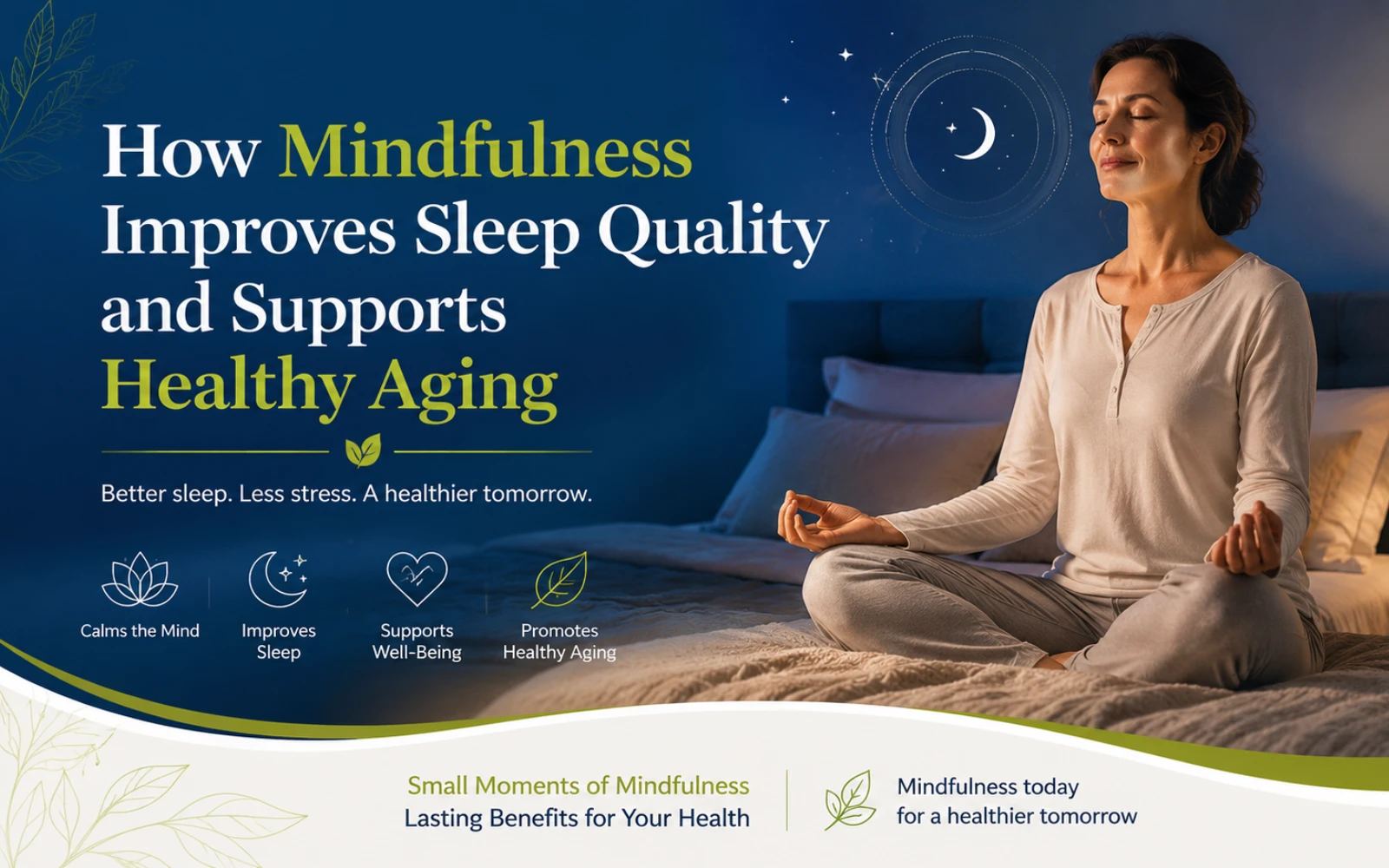
Mindfulness and healthy sleep can work together to support overall well-being and healthy aging. Quality sleep gives the body and mind time to recover, while mindfulness may help reduce the mental tension that makes it difficult to relax at night.
Modern lifestyles often expose us to constant information, work demands, screens, and daily stress. Developing a calming evening routine can help create a clear transition between daytime activity and nighttime rest.
In this guide, we explore the connection between sleep and longevity, simple evening mindfulness practices, meditation before bedtime, and practical relaxation techniques that can become part of a healthy nighttime routine.
▹ Connection between sleep and longevity
Sleep is an important part of healthy aging. During sleep, the body supports physical recovery, memory, emotional regulation, and many other essential processes. Consistently poor sleep can affect mood, concentration, energy, and overall quality of life.
Mindfulness does not replace healthy sleep habits, but it can be a useful tool for creating a calmer mental state before bedtime.
| Sleep Factor | Why It Matters |
|---|---|
| Consistent sleep schedule | Helps establish a predictable daily rhythm. |
| Relaxation before bed | Creates a transition from activity to rest. |
| Quality sleep environment | Supports comfortable and uninterrupted rest. |
| Stress management | May make it easier to relax at night. |
| Mindful evening routine | Encourages awareness and calm before sleep. |
▹ Evening mindfulness practices
Evening mindfulness does not need to be complicated. The goal is to slow down, reduce distractions, and bring your attention to the present moment.
| Practice | How to Do It | Suggested Time |
|---|---|---|
| Mindful breathing | Focus on slow, comfortable breaths. | 5–10 minutes |
| Body scan | Notice physical sensations from head to toe. | 10–15 minutes |
| Gratitude practice | Reflect on three positive moments from the day. | 3–5 minutes |
| Mindful stretching | Perform gentle stretches while focusing on body sensations. | 5–10 minutes |
| Digital pause | Put away phones and other stimulating devices. | 30–60 minutes |
▹ Meditation before bedtime
A short meditation session before bed can help shift attention away from unfinished tasks and repetitive thoughts. Instead of trying to force yourself to sleep, focus on creating a relaxed and comfortable state.
| Meditation Type | Focus | Best Time |
|---|---|---|
| Mindful breathing | Natural breathing rhythm | 5–10 minutes |
| Body scan meditation | Physical sensations | 10–15 minutes |
| Guided meditation | Relaxation instructions | 10–20 minutes |
| Loving-kindness meditation | Compassion and positive thoughts | 5–15 minutes |
▹ Simple bedtime meditation technique
Lie down or sit comfortably and allow your body to relax. Close your eyes and bring your attention to your breathing. Notice each inhale and exhale without trying to control it. When thoughts appear, acknowledge them and gently return your attention to the breath.
| Step | Practice |
|---|---|
| 1. Get comfortable | Choose a quiet position where your body can relax. |
| 2. Slow down | Allow your breathing to become calm and natural. |
| 3. Notice sensations | Pay attention to your body without judging it. |
| 4. Observe thoughts | Let thoughts come and go without following them. |
| 5. Return to the breath | Gently bring your attention back whenever your mind wanders. |

▹ Relaxation techniques for better sleep
Relaxation techniques can help reduce physical and mental tension before bedtime. The most effective approach is usually the one that feels comfortable and easy to repeat every evening.
| Technique | How It Works | Suggested Duration |
|---|---|---|
| Deep breathing | Slow, comfortable breaths encourage relaxation. | 5–10 minutes |
| Progressive muscle relaxation | Gently tense and relax different muscle groups. | 10–15 minutes |
| Mindful stretching | Slow movements help release physical tension. | 5–10 minutes |
| Guided relaxation | Follow calming verbal instructions. | 10–20 minutes |
| Quiet reading | Provides a low-stimulation activity before bed. | 10–20 minutes |
▹ Building a healthy nighttime routine
A consistent nighttime routine helps signal to your body and mind that the day is coming to an end. Instead of waiting until you feel exhausted, create a predictable sequence of calming activities that you can repeat most evenings.
| Time Before Bed | Healthy Habit | Purpose |
|---|---|---|
| 60 minutes | Reduce screen time and bright light exposure. | Create a calmer environment. |
| 45 minutes | Take a warm shower or practice gentle stretching. | Release physical tension. |
| 30 minutes | Read, journal, or practice gratitude. | Shift attention away from daily stress. |
| 15 minutes | Practice mindful breathing or meditation. | Encourage mental relaxation. |
| Bedtime | Keep the bedroom quiet, dark, and comfortable. | Support a consistent sleep environment. |
▹ Simple evening mindfulness routine
You do not need a long meditation session to benefit from mindfulness. A short and consistent routine may be easier to maintain than an ambitious practice that becomes difficult to follow.
| Step | Practice | Time |
|---|---|---|
| 1 | Put away electronic devices. | 5 minutes |
| 2 | Take several slow, comfortable breaths. | 2–3 minutes |
| 3 | Practice a short body scan. | 5 minutes |
| 4 | Reflect on three things you appreciate. | 2–3 minutes |
| 5 | Lie down and allow your attention to settle naturally. | 5 minutes |
▸ Frequently Asked Questions
Can mindfulness help improve sleep?
Mindfulness may help reduce mental stress and promote relaxation, which can support healthier sleep habits and a calmer bedtime routine.
How long should I meditate before bed?
Beginners can start with 5–10 minutes of mindful breathing or meditation. A short practice performed consistently may be easier to maintain than longer sessions.
What is the best mindfulness exercise for sleep?
Mindful breathing and body scan meditation are simple options because they encourage attention to the present moment and help create a relaxed bedtime environment.
Should I use my phone during meditation before bed?
It is generally better to minimize screen use before bedtime. If you use a guided meditation, consider starting it and then putting the device away.
Can better sleep support healthy aging?
Quality sleep supports physical recovery, cognitive function, emotional well-being, and many processes important for overall health and healthy aging.
Mindfulness can be a simple addition to a healthy nighttime routine. Practicing slow breathing, meditation, gentle stretching, gratitude, and other relaxation techniques may help create a calmer transition from daytime activity to sleep. Combined with a consistent sleep schedule, a comfortable sleep environment, regular physical activity, and balanced nutrition, these habits can support overall well-being and a healthy approach to aging.
How Mindfulness Improves Sleep Quality and Supports Healthy Aging