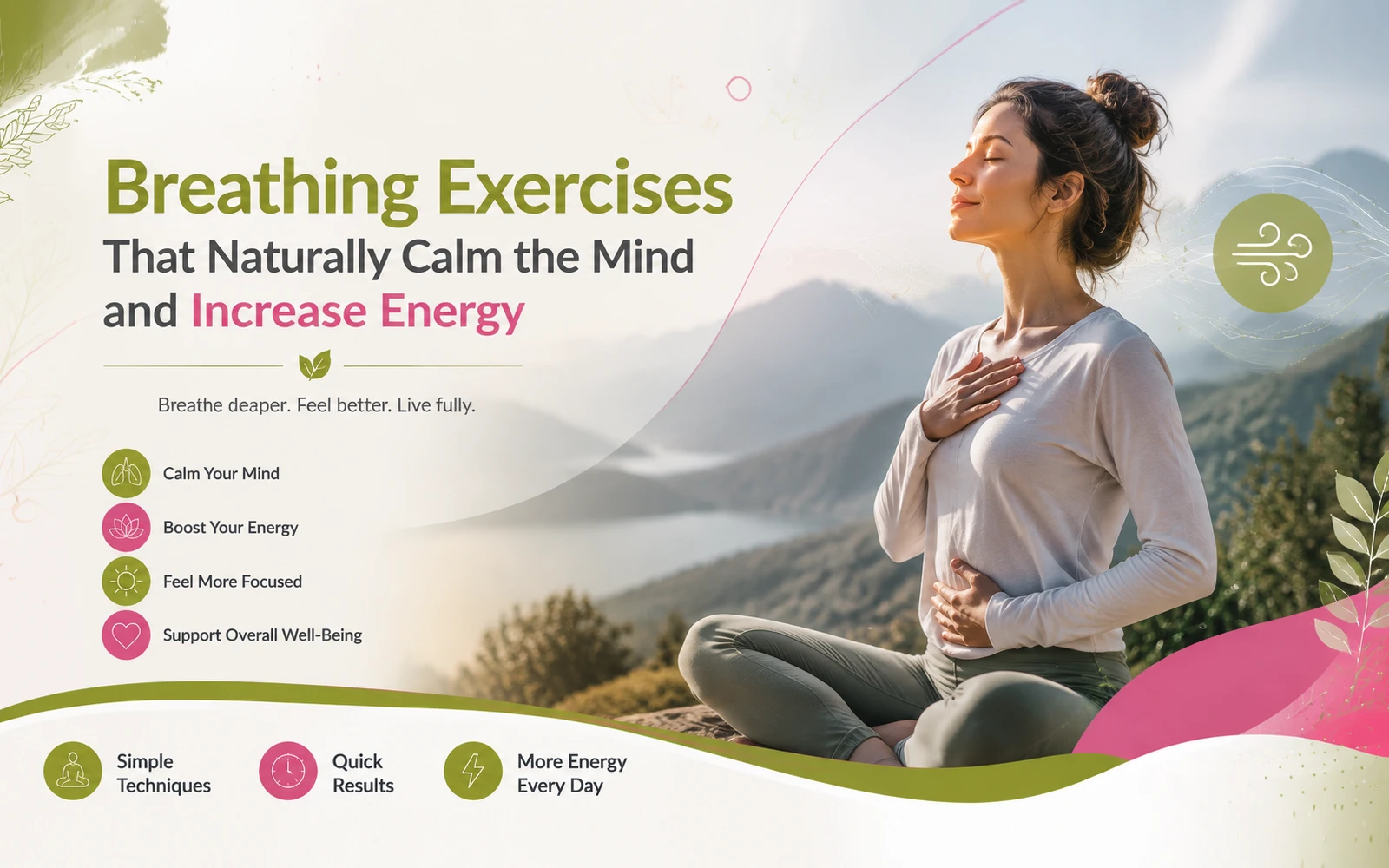
Breathing exercises are one of the simplest and most accessible ways to calm the mind, reduce stress, and support daily energy levels. Unlike many wellness practices, controlled breathing can be practiced anywhere — at home, at work, or during moments of tension.
The way we breathe directly influences the nervous system. Slow, intentional breathing can help the body shift from a stress response into a calmer state, supporting relaxation, focus, and emotional balance.
This guide explores several effective breathing techniques, including box breathing, the 4-7-8 method, diaphragmatic breathing, and simple daily routines for stress relief.
▹ Why breathing affects the nervous system
Breathing is closely connected with the autonomic nervous system, which controls many automatic body functions such as heart rate, stress response, and relaxation. When we experience stress, breathing often becomes faster and more shallow.
By consciously slowing and deepening the breath, we can send signals of safety to the nervous system and encourage a more relaxed physical state.
| Breathing Pattern | Effect on the Body |
|---|---|
| Fast, shallow breathing | May increase feelings of tension and stress. |
| Slow breathing | Encourages relaxation. |
| Deep abdominal breathing | Supports oxygen exchange and calmness. |
| Controlled breathing exercises | Helps improve focus and emotional regulation. |
▹ Benefits of breathing exercises
Regular breathing practices may become a powerful tool for supporting mental and physical well-being. Even a few minutes per day can help create a sense of calm and improve awareness.
| Benefit | How It Helps |
|---|---|
| Stress reduction | Helps calm the body's stress response. |
| Better focus | Improves attention and mental clarity. |
| Emotional balance | Creates space between emotions and reactions. |
| Improved relaxation | Supports a calmer mind and body. |
| Better energy management | Helps reduce tension and mental fatigue. |
▹ Box breathing technique
Box breathing is a simple technique used to create a steady breathing rhythm. It involves four equal stages: inhaling, holding, exhaling, and holding again. This method can help calm the mind during stressful situations.
| Step | Action | Duration |
|---|---|---|
| 1. Inhale | Breathe in slowly through your nose. | 4 seconds |
| 2. Hold | Pause and keep your breath relaxed. | 4 seconds |
| 3. Exhale | Release the breath slowly. | 4 seconds |
| 4. Hold | Pause before beginning the next cycle. | 4 seconds |
▹ How to practice box breathing
Find a comfortable position and relax your shoulders. Focus only on the rhythm of your breathing. Repeat the cycle for several minutes while keeping your breath smooth and controlled.
| Recommendation | Tip |
|---|---|
| Start slowly | Practice for 2–5 minutes at first. |
| Stay comfortable | Do not force your breath or create tension. |
| Practice regularly | Consistency is more important than duration. |
| Use during stress | Helpful before meetings, difficult conversations, or stressful moments. |
▹ 4-7-8 breathing method
The 4-7-8 breathing technique is designed to encourage relaxation by using a longer exhalation phase. Many people practice this method before sleep or during moments of anxiety and tension.
| Stage | Breathing Pattern |
|---|---|
| Inhale | Breathe in for 4 seconds. |
| Hold | Hold the breath for 7 seconds. |
| Exhale | Slowly exhale for 8 seconds. |
▹ Diaphragmatic breathing
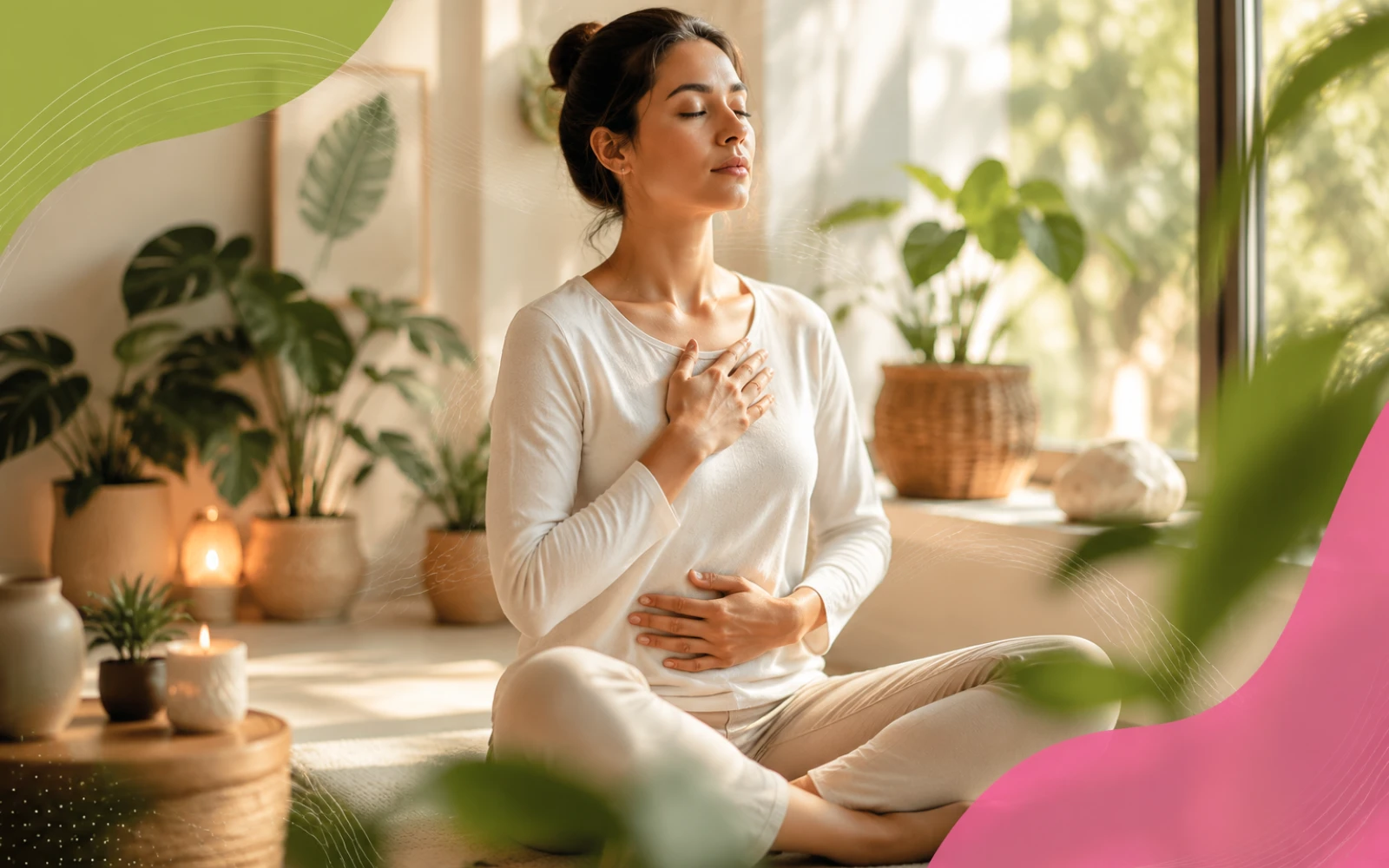
Diaphragmatic breathing, also known as belly breathing, is a technique that encourages deeper breathing by engaging the diaphragm muscle. Instead of taking short breaths from the chest, this method allows the abdomen to expand naturally during inhalation.
This type of breathing may help promote relaxation, improve body awareness, and reduce physical tension caused by stress.
| Step | How to Practice |
|---|---|
| 1. Find a comfortable position | Sit or lie down with your shoulders relaxed. |
| 2. Place your hands | Put one hand on your chest and one on your abdomen. |
| 3. Breathe deeply | Allow your belly to rise while inhaling slowly. |
| 4. Exhale gently | Let your abdomen relax as you release the breath. |
| 5. Repeat | Continue for several minutes with a calm rhythm. |
▹ Benefits of diaphragmatic breathing
| Potential Benefit | Why It Matters |
|---|---|
| Deeper relaxation | Encourages the body to enter a calmer state. |
| Reduced physical tension | May help relax muscles during stressful moments. |
| Improved breathing awareness | Helps develop healthier breathing patterns. |
| Better oxygen efficiency | Supports comfortable and controlled breathing. |
▹ Daily breathing routine for stress relief
Creating a simple daily breathing routine makes it easier to turn breathing exercises into a long-term wellness habit. Short sessions throughout the day can help maintain a calmer mindset and reduce accumulated stress.
| Time of Day | Breathing Practice | Purpose |
|---|---|---|
| Morning | 5 minutes of mindful breathing | Start the day with focus and calmness. |
| During work | Box breathing for 2–5 minutes | Reduce tension and improve concentration. |
| Afternoon | Deep diaphragmatic breathing | Release stress and mental fatigue. |
| Before sleep | 4-7-8 breathing method | Support relaxation and better rest. |
▹ How to build a consistent breathing habit
Like meditation and mindfulness, breathing exercises become more effective when practiced consistently. The goal is not perfection but creating a regular moment of awareness during your daily routine.
| Habit-Building Tip | How to Apply It |
|---|---|
| Choose a fixed time | Practice at the same time each day. |
| Start small | Begin with just 3–5 minutes. |
| Connect it with existing habits | Practice after waking up or before bedtime. |
| Create a calm environment | Choose a quiet and comfortable place. |
| Track progress | Notice changes in stress levels and focus. |
▸ Frequently Asked Questions
How long should I practice breathing exercises each day?
Beginners can start with 3–5 minutes per day. As the practice becomes more comfortable, sessions can gradually increase to 10–15 minutes.
Can breathing exercises reduce stress?
Yes. Slow and controlled breathing may help activate the relaxation response and support a calmer emotional state.
Which breathing technique is best for beginners?
Mindful breathing and diaphragmatic breathing are usually the easiest techniques to start with because they focus on natural breathing patterns.
When is the best time to practice breathing exercises?
Any time can work. Many people prefer morning practice, short breaks during work, or breathing exercises before sleep.
Can breathing exercises improve energy levels?
Controlled breathing may help reduce stress and mental fatigue, which can support better focus and a greater sense of daily energy.
Breathing exercises are simple but powerful tools for supporting a calmer mind and healthier lifestyle. By practicing techniques such as box breathing, the 4-7-8 method, and diaphragmatic breathing, you can create a daily habit that supports stress management, mindfulness, and overall well-being. Combined with healthy nutrition, regular movement, and quality sleep, conscious breathing can be an important part of a balanced longevity routine.
Breathing Exercises That Naturally Calm the Mind and Increase Energy