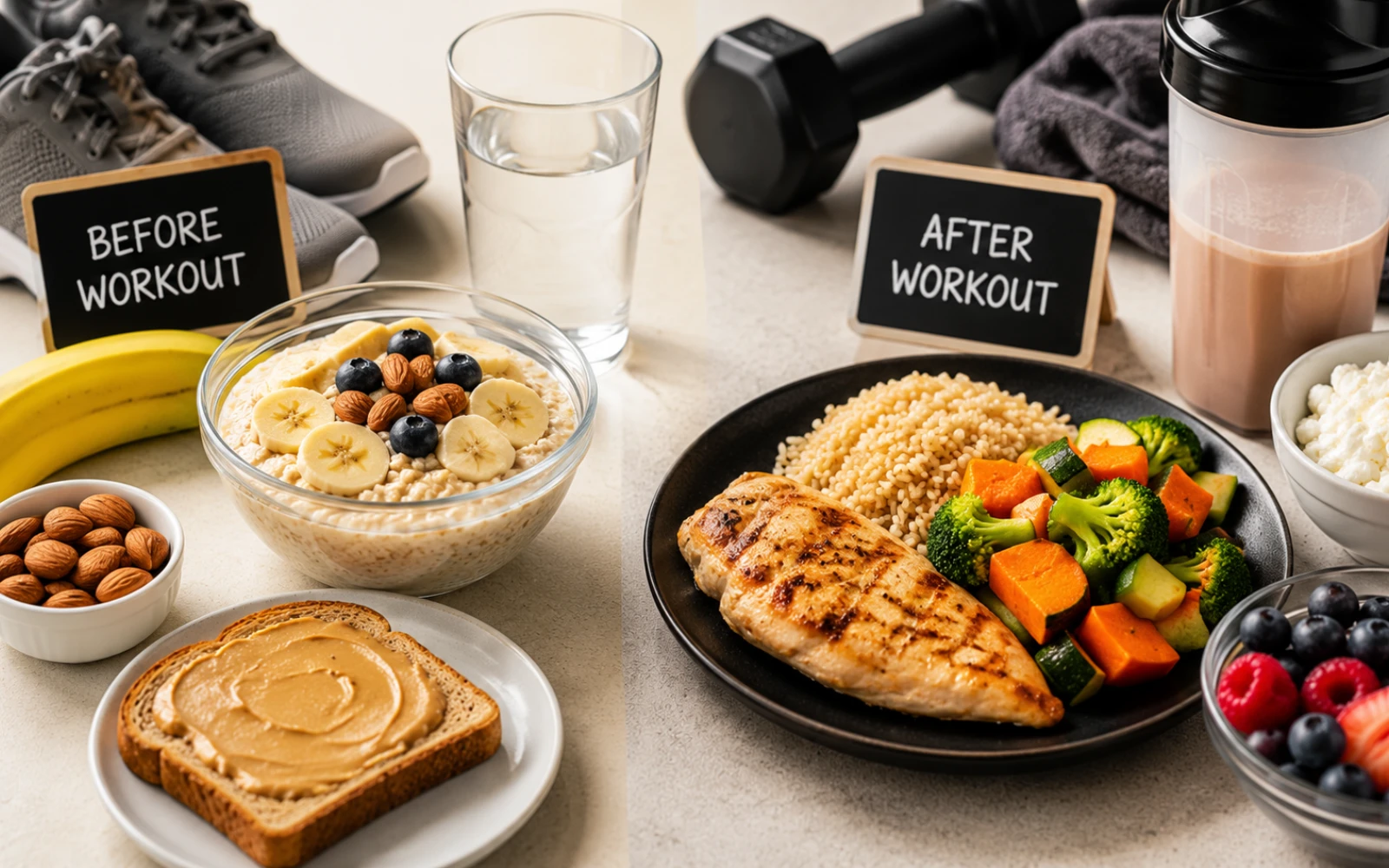
Proper nutrition before and after exercise plays a major role in athletic performance, recovery, and maintaining consistent energy. Whether your goal is improving endurance, building muscle, or simply staying active, choosing the right foods at the right time helps your body perform efficiently and recover faster.
A balanced combination of carbohydrates, protein, healthy fats, and fluids provides fuel for your workout while supporting muscle repair afterward. Understanding how to structure your meals can help maximize every training session.
▹ Why pre- and post-workout nutrition matters
Exercise increases your body's demand for energy and nutrients. Eating appropriately before training provides fuel for your muscles, while post-workout meals help replenish glycogen stores and support muscle recovery.
| Nutrition Timing | Main Purpose |
|---|---|
| Before Workout | Provide energy and improve exercise performance. |
| After Workout | Support muscle recovery and replenish glycogen. |
| Hydration | Maintain physical performance and temperature regulation. |
▹ Pre-workout nutrition
The ideal pre-workout meal should be eaten approximately 2–3 hours before exercise. It should include complex carbohydrates for sustained energy, moderate protein, and small amounts of healthy fat.
| Food Group | Examples | Benefits |
|---|---|---|
| Complex carbohydrates | Oats, brown rice, sweet potatoes | Provide long-lasting energy. |
| Lean protein | Chicken, turkey, eggs, Greek yogurt | Supports muscle maintenance. |
| Healthy fats | Avocado, nuts, olive oil | Provide additional fuel. |
| Fruit | Bananas, berries, apples | Natural carbohydrates and vitamins. |
▹ Best pre-workout meal ideas
| Meal | When to Eat |
|---|---|
| Oatmeal with banana and almonds | 2–3 hours before training |
| Grilled chicken with brown rice | 2–3 hours before training |
| Greek yogurt with berries | 1–2 hours before training |
| Whole-grain toast with peanut butter | 1–2 hours before training |
| Banana | 30–60 minutes before training |
▹ Post-workout recovery nutrition
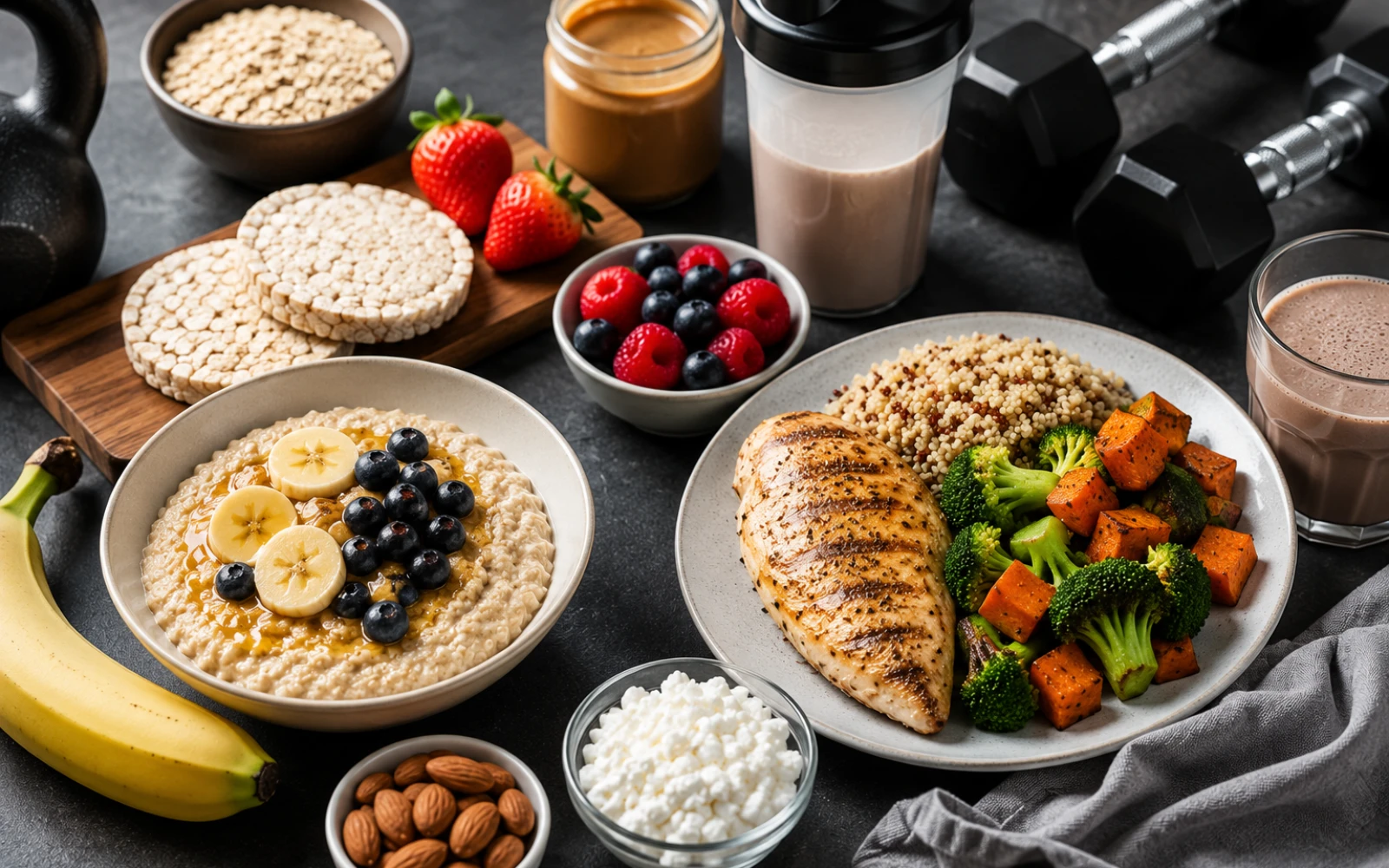
After exercise, your muscles are ready to absorb nutrients that support recovery. Combining protein with carbohydrates helps rebuild muscle tissue and restore glycogen stores.
| Nutrient | Role in Recovery |
|---|---|
| Protein | Supports muscle repair and growth. |
| Carbohydrates | Restore glycogen stores. |
| Water | Replaces fluids lost through sweat. |
| Electrolytes | Support hydration and muscle function. |
▹ Best protein sources after exercise
High-quality protein provides essential amino acids needed for muscle recovery. Aim to include protein within approximately two hours after finishing your workout.
| Protein Source | Benefits |
|---|---|
| Chicken breast | Lean, high-quality protein. |
| Salmon | Protein plus omega-3 fatty acids. |
| Eggs | Complete protein with important nutrients. |
| Greek yogurt | Protein and probiotics. |
| Cottage cheese | Slow-digesting casein protein. |
| Protein smoothie | Convenient option after training. |
▹ Fast vs. slow carbohydrates
Both fast- and slow-digesting carbohydrates have a place in sports nutrition. Choosing the right type depends on when you eat and the intensity of your workout.
| Carbohydrate Type | Examples | Best Time |
|---|---|---|
| Fast carbohydrates | Bananas, dates, raisins | Immediately before or after training. |
| Slow carbohydrates | Oats, quinoa, brown rice | Main meals before exercise. |
What to Eat Before and After a Workout for Maximum Energy