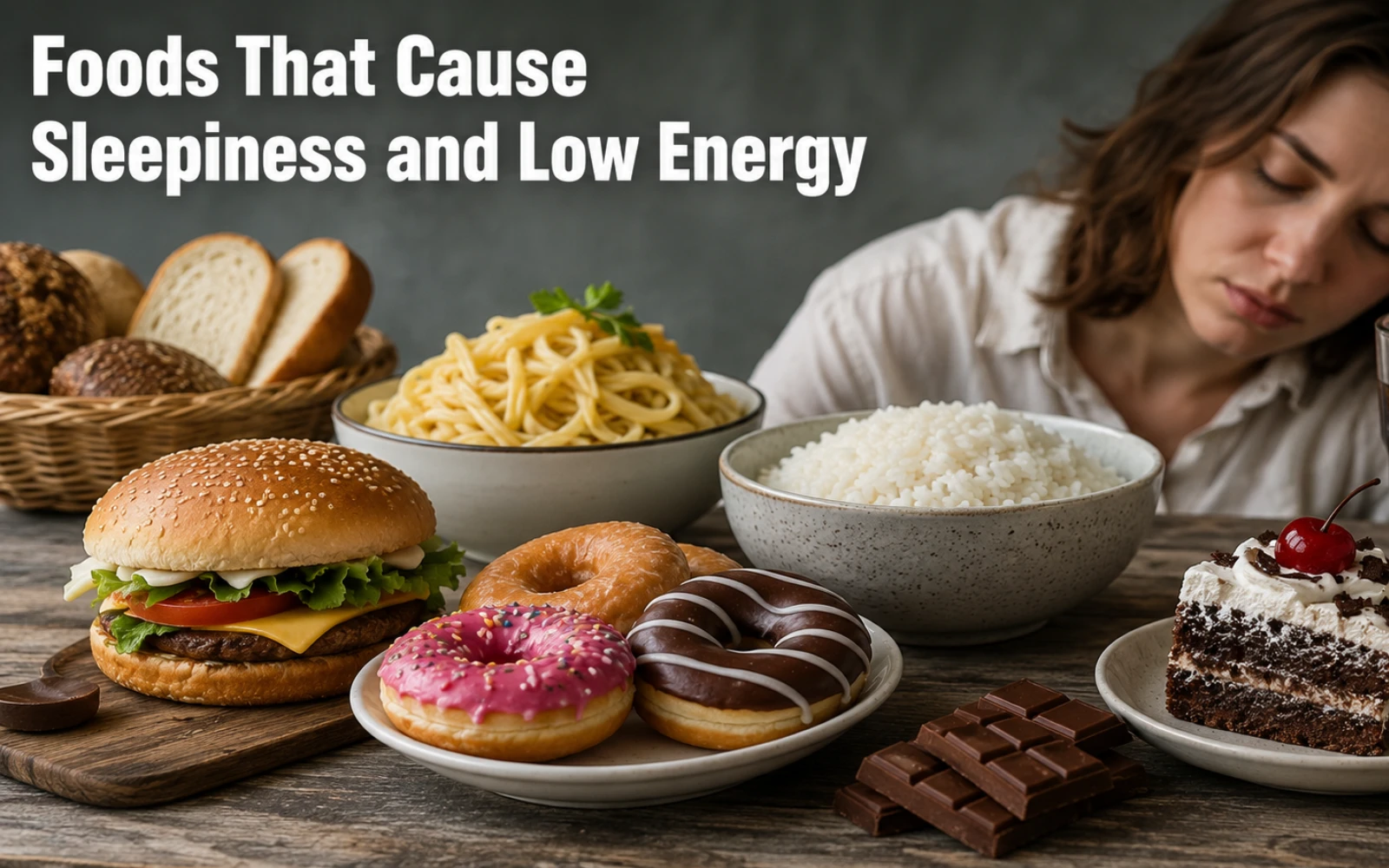
Feeling sleepy after eating is something many people experience, but it is not always normal. While large meals can naturally make you feel relaxed, certain foods and eating habits may cause significant drops in energy, reduced concentration, and afternoon fatigue.
Highly processed foods, excessive sugar, alcohol, and meals lacking protein can all contribute to unstable blood sugar levels and decreased mental performance. Understanding which foods may cause energy crashes allows you to make healthier choices that support consistent energy throughout the day.
▹ Why do you feel sleepy after eating?
After a meal, your body directs more blood flow toward digestion while hormones involved in processing nutrients begin working. Large meals that are high in sugar or refined carbohydrates may also cause rapid blood sugar fluctuations that contribute to fatigue.
| Possible Cause | Effect on Energy |
|---|---|
| Large portions | Increase digestive workload and may promote drowsiness. |
| High sugar intake | Causes rapid spikes and crashes in blood glucose. |
| Highly processed foods | Provide calories but fewer essential nutrients. |
| Low protein intake | May reduce satiety and stable energy. |
| Alcohol | Can impair alertness and concentration. |
▹ Too much added sugar
Foods high in added sugar may provide a quick burst of energy, but this is often followed by a rapid decline in blood sugar. These fluctuations can leave you feeling tired, hungry, and less productive shortly after eating.
| High-Sugar Foods | Healthier Alternative |
|---|---|
| Soft drinks | Water with lemon or sparkling water. |
| Candy | Fresh berries or fruit. |
| Sweet pastries | Whole-grain toast with nut butter. |
| Sugary breakfast cereals | Oatmeal with fruit. |
| Sweetened coffee drinks | Black coffee or unsweetened latte. |
▹ Highly processed foods
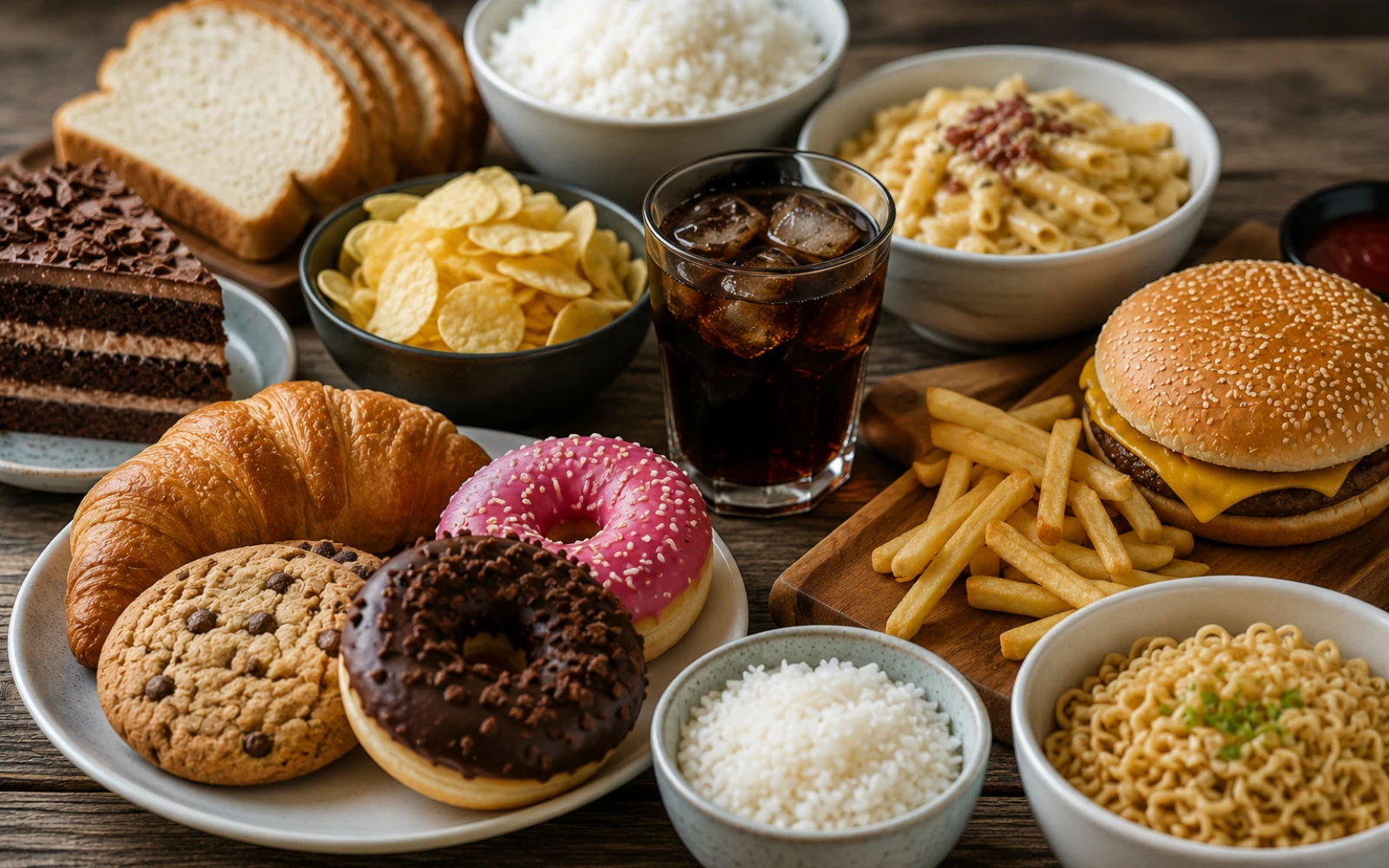
Ultra-processed foods often contain refined carbohydrates, added sugars, unhealthy fats, and excessive sodium while providing relatively few vitamins, minerals, and fiber. Regular consumption may contribute to unstable energy levels and reduced overall diet quality.
| Processed Food | Potential Effect |
|---|---|
| Fast food meals | High calories with limited nutritional value. |
| Packaged snack foods | Low fiber and high refined carbohydrates. |
| Frozen fried foods | High saturated fat and sodium. |
| Instant noodles | Low protein and fiber. |
| Packaged desserts | High added sugar and refined flour. |
▹ Alcohol and energy levels
Although alcohol may initially create feelings of relaxation, it can negatively affect sleep quality, hydration, concentration, and physical performance. Even moderate amounts may contribute to next-day fatigue.
| Effect of Alcohol | Impact |
|---|---|
| Dehydration | May increase fatigue and headaches. |
| Poor sleep quality | Reduces recovery overnight. |
| Reduced concentration | Can impair productivity. |
| Lower exercise performance | May slow recovery after workouts. |
▹ Not eating enough protein
Protein helps maintain satiety and supports steady energy throughout the day. Meals that contain mostly refined carbohydrates without enough protein may lead to hunger returning quickly and larger fluctuations in blood sugar.
| Good Protein Sources | Main Benefits |
|---|---|
| Chicken breast | Lean complete protein. |
| Eggs | High-quality protein and nutrients. |
| Greek yogurt | Protein with probiotics. |
| Fish | Protein plus healthy omega-3 fats. |
| Beans and lentils | Plant protein and fiber. |
▹ How to avoid energy crashes throughout the day
The best way to maintain steady energy is to build balanced meals that combine protein, healthy fats, complex carbohydrates, and fiber. Eating regularly and staying hydrated also help support stable blood sugar and mental performance.
| Healthy Habit | Benefit |
|---|---|
| Eat balanced meals | Provides steady energy throughout the day. |
| Include protein at every meal | Supports satiety and muscle maintenance. |
| Choose whole grains | Slower digestion and more stable blood sugar. |
| Drink enough water | Helps maintain concentration and physical performance. |
| Limit added sugar | Reduces rapid energy spikes and crashes. |
| Eat vegetables daily | Provides fiber, vitamins, and minerals. |
▹ Foods that support long-lasting energy
Replacing processed foods with nutrient-rich whole foods can help improve energy levels while supporting overall health.
| Food | Main Benefit |
|---|---|
| Oatmeal | Slow-release carbohydrates and fiber. |
| Eggs | Complete protein for lasting fullness. |
| Greek yogurt | Protein with probiotics. |
| Avocados | Healthy fats that support sustained energy. |
| Salmon | Protein and omega-3 fatty acids. |
| Mixed nuts | Healthy fats, magnesium, and protein. |
| Fresh berries | Fiber and antioxidants. |
| Leafy greens | Essential vitamins and minerals. |
▹ Sample day of eating for consistent energy
| Meal | Example | Why It Helps |
|---|---|---|
| Breakfast | Oatmeal with berries and Greek yogurt | Provides fiber, protein, and complex carbohydrates. |
| Morning Snack | Apple with almonds | Natural carbohydrates with healthy fats. |
| Lunch | Grilled chicken, quinoa, vegetables | Balanced nutrition for steady energy. |
| Afternoon Snack | Greek yogurt with blueberries | Supports focus during the afternoon. |
| Dinner | Salmon, sweet potato, broccoli | Supports recovery and overnight nutrition. |
▹ Healthy snack ideas that won't cause fatigue
| Snack | Benefits |
|---|---|
| Mixed nuts | Healthy fats and protein. |
| Cottage cheese with berries | Protein and antioxidants. |
| Vegetables with hummus | Fiber and plant-based protein. |
| Hard-boiled eggs | Complete protein. |
| Banana with peanut butter | Balanced carbohydrates and healthy fats. |
▸ Frequently Asked Questions
Why do I always feel sleepy after lunch?
Large portions, refined carbohydrates, sugary foods, dehydration, or insufficient sleep may all contribute to afternoon tiredness.
Does sugar really cause energy crashes?
Yes. Foods high in added sugar can raise blood glucose quickly, followed by a rapid decline that leaves many people feeling tired and hungry.
Can eating more protein improve my energy?
Including protein with meals may help maintain satiety and support more stable energy levels throughout the day.
Should I completely avoid carbohydrates?
No. Complex carbohydrates such as oats, brown rice, quinoa, and sweet potatoes are valuable sources of long-lasting energy.
Is hydration important for preventing fatigue?
Absolutely. Even mild dehydration may reduce concentration, mood, and physical performance while increasing feelings of tiredness.
Feeling sleepy after meals is often influenced by food choices rather than digestion alone. Replacing processed foods and added sugars with balanced meals rich in protein, fiber, healthy fats, and complex carbohydrates can help support steady energy throughout the day. Combined with regular hydration, quality sleep, and consistent meal timing, these habits can reduce fatigue and improve overall well-being.
Foods That Cause Sleepiness and Low Energy