Starting a low-carb diet can feel complicated when you are not sure what to eat throughout the day. A simple meal plan can make the transition easier by providing practical ideas for balanced breakfasts, lunches, dinners, and snacks.
A low-carb meal plan for beginners does not have to mean eliminating all carbohydrates. Instead, the focus is usually on reducing highly refined carbohydrates and added sugars while emphasizing protein, non-starchy vegetables, healthy fats, and minimally processed foods.
The ideal amount of carbohydrates varies from person to person. Your needs may depend on your activity level, dietary preferences, health goals, and overall eating pattern. The examples below are intended as general meal ideas rather than a strict diet prescription.
▹ How to build a simple low-carb meal plan
A balanced low-carb meal can be built around a few basic components. Start with a source of protein, add plenty of non-starchy vegetables, and include a moderate amount of healthy fat. Depending on your personal carbohydrate target, small portions of fruit, legumes, whole grains, or other carbohydrate-containing foods may also fit into your diet.
Instead of focusing only on what you remove, think about what you can add to your meals. Eggs, fish, poultry, lean meat, Greek yogurt, leafy greens, broccoli, cauliflower, zucchini, avocado, nuts, seeds, and olive oil can all be useful ingredients in a varied low-carb eating pattern.
| Meal Component | Low-Carb Options |
|---|---|
| Protein | Eggs, chicken, turkey, fish, lean beef, Greek yogurt, cottage cheese |
| Non-starchy vegetables | Spinach, broccoli, cauliflower, zucchini, cucumber, peppers, mushrooms |
| Healthy fats | Avocado, olive oil, nuts, seeds, olives |
| Lower-carb fruit | Berries, strawberries, raspberries, blackberries |
| Flavor and variety | Fresh herbs, spices, lemon, garlic, vinegar, and low-sugar sauces |
▹ A typical low-carb breakfast
Breakfast is a good opportunity to combine protein, vegetables, and healthy fats. You do not need to rely on traditional high-carbohydrate breakfast foods such as sugary cereals, pastries, or sweetened baked goods.
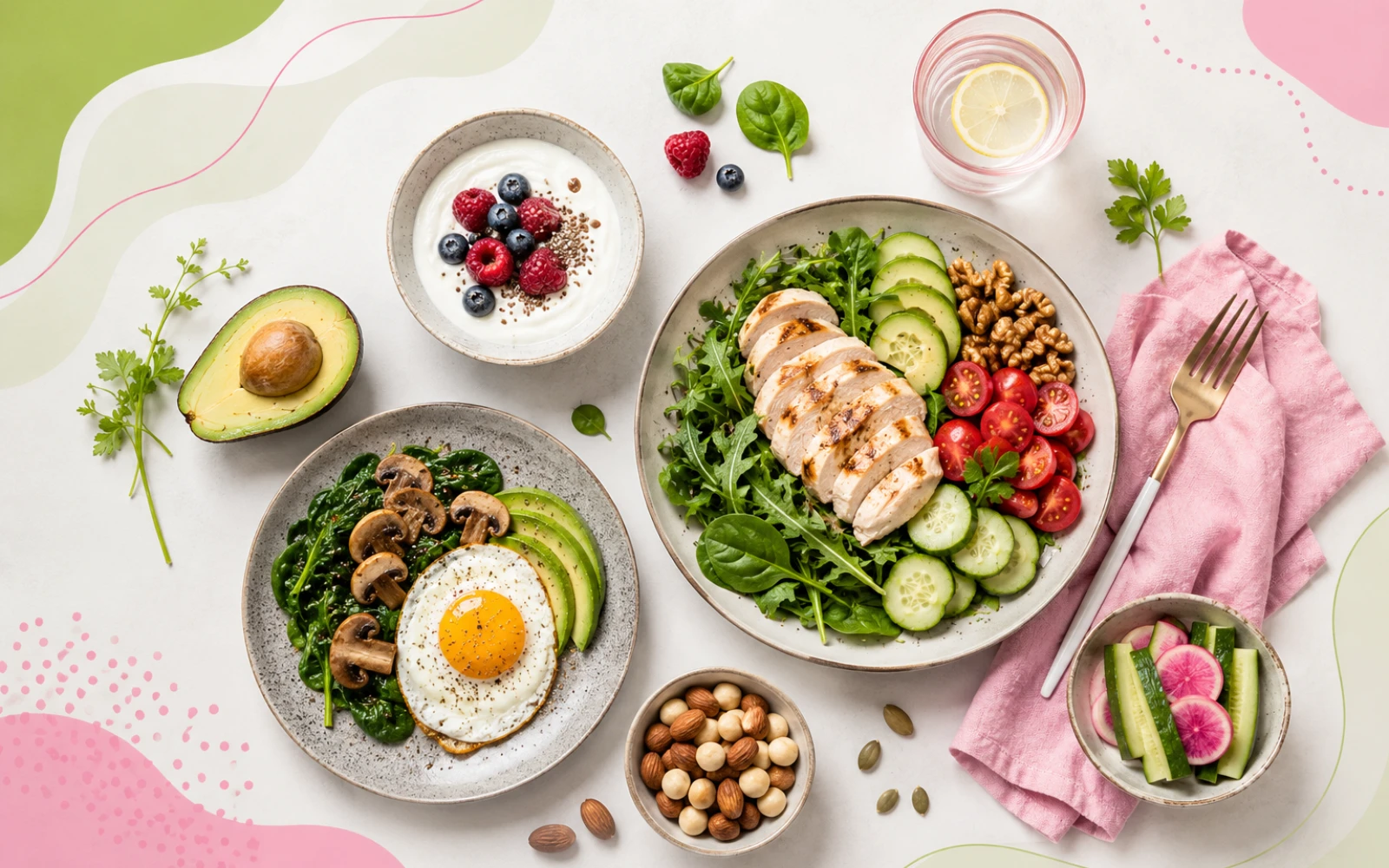
For example, you could prepare scrambled eggs with spinach and mushrooms, an omelet with vegetables and avocado, or plain Greek yogurt topped with berries, chia seeds, and a small portion of nuts.
If you prefer a lighter breakfast, a boiled egg with avocado and vegetables can be a simple option. The goal is to choose foods that provide satisfying nutrients without relying heavily on added sugars and refined carbohydrates.
| Breakfast Idea | Main Ingredients |
|---|---|
| Vegetable omelet | Eggs, spinach, mushrooms, peppers, avocado |
| Greek yogurt bowl | Plain Greek yogurt, berries, chia seeds, walnuts |
| Egg and avocado plate | Boiled eggs, avocado, cucumber, tomatoes, herbs |
| Breakfast scramble | Eggs, turkey, spinach, mushrooms, and vegetables |
▹ Low-carb lunch ideas
Lunch can be simple and filling when you build it around protein and vegetables. Salads are an easy option, but a low-carb lunch does not have to mean eating salad every day.
Try grilled chicken with roasted vegetables, salmon with a leafy green salad, turkey lettuce wraps, or a vegetable bowl topped with grilled protein and olive oil-based dressing.
When preparing lunch at home, cooking extra protein and vegetables can save time later in the week. Leftover roasted chicken, salmon, vegetables, or grilled meat can easily become the foundation of another meal.
- Chicken salad: Grilled chicken, mixed greens, cucumber, avocado, and olive oil dressing.
- Salmon bowl: Baked salmon, broccoli, zucchini, and avocado.
- Turkey lettuce wraps: Turkey, lettuce leaves, cucumber, tomato, and a low-sugar sauce.
- Chicken vegetable plate: Grilled chicken with roasted cauliflower and green vegetables.
▹ Low-carb dinner ideas
Dinner can follow the same basic structure as lunch: protein, plenty of vegetables, and a source of healthy fat. This makes it easier to create meals without complicated recipes or specialty low-carb products.
Examples include grilled chicken with roasted broccoli, baked salmon with asparagus, lean beef with sautéed vegetables, or turkey meatballs served with zucchini noodles instead of traditional pasta.
If you are transitioning from a higher-carbohydrate diet, you can gradually reduce portions of foods such as pasta, rice, bread, and potatoes while increasing non-starchy vegetables. This approach may feel more sustainable than trying to completely change your eating habits overnight.
▹ Low-Carb Snack Ideas
Snacks are not required on a low-carb diet, especially if your regular meals are satisfying. However, having a few simple options available can be helpful when you are genuinely hungry between meals.
Choose snacks that combine protein, healthy fats, or fiber rather than relying on highly processed low-carb snack products. Nuts, seeds, plain Greek yogurt, cheese, boiled eggs, vegetables with hummus, and small portions of berries can all work well depending on your individual carbohydrate target.
- Plain Greek yogurt with a few berries
- A small handful of almonds or walnuts
- Boiled eggs with cucumber slices
- Celery or bell peppers with a small portion of hummus
- Cottage cheese with herbs and cucumber
- Cheese with fresh vegetables
▹ A Simple 7-Day Low-Carb Meal Plan
A weekly plan can make grocery shopping and meal preparation much easier. The following example provides a flexible starting point rather than a strict prescription. Portions should be adjusted according to your individual energy needs, hunger, activity level, and overall dietary goals.
| Day | Breakfast | Lunch | Dinner |
|---|---|---|---|
| Monday | Vegetable omelet with avocado | Grilled chicken salad with olive oil dressing | Baked salmon with broccoli and zucchini |
| Tuesday | Greek yogurt with berries, chia seeds, and walnuts | Turkey lettuce wraps with cucumber and tomato | Grilled chicken with roasted cauliflower and green beans |
| Wednesday | Scrambled eggs with spinach and mushrooms | Salmon salad with avocado and mixed greens | Lean beef with sautéed peppers, mushrooms, and zucchini |
| Thursday | Boiled eggs with avocado and cucumber | Chicken and vegetable bowl | Turkey meatballs with zucchini noodles and tomato sauce |
| Friday | Greek yogurt with raspberries and pumpkin seeds | Grilled turkey salad with vegetables | Baked white fish with asparagus and roasted vegetables |
| Saturday | Egg and vegetable scramble | Chicken lettuce wraps with avocado | Grilled lean steak with broccoli and a side salad |
| Sunday | Vegetable omelet with berries | Leftover grilled chicken with mixed vegetables | Roasted chicken with cauliflower and green beans |
▹ How to Make Low-Carb Meal Prep Easier
Meal preparation can make a low-carb eating pattern much easier to maintain. You do not need to cook seven completely different meals every week. Preparing a few versatile ingredients in advance can save considerable time.
For example, cook several portions of chicken, turkey, salmon, or another protein at once. At the same time, roast a large tray of vegetables and wash or chop salad ingredients. These foods can then be combined in different ways throughout the week.
| Meal Prep Task | Simple Strategy |
|---|---|
| Protein | Prepare several servings of chicken, turkey, fish, or lean meat. |
| Vegetables | Roast or steam several portions of non-starchy vegetables at once. |
| Salad ingredients | Wash and prepare greens, cucumber, peppers, and other vegetables. |
| Breakfast | Prepare boiled eggs or portion Greek yogurt and toppings in advance. |
| Snacks | Pre-portion nuts, seeds, cheese, or vegetables for convenient options. |
▹ What to Drink on a Low-Carb Diet
Drinks can contribute a surprising amount of carbohydrates and added sugar. Water is generally the simplest everyday choice, while unsweetened tea, coffee, and sparkling water can provide variety without adding significant carbohydrates.
Be careful with sweetened coffee drinks, regular soda, fruit juice, and other sugary beverages. Even when a meal itself is low in carbohydrates, a high-sugar drink can significantly increase the carbohydrate content of the overall meal.
- Water and sparkling water
- Unsweetened tea
- Black coffee or coffee with a suitable unsweetened addition
- Unsweetened herbal tea
▹ Common Beginner Mistakes
One of the most common mistakes is focusing only on reducing carbohydrates without paying attention to overall diet quality. Replacing bread, pasta, and sweets with highly processed low-carb products does not automatically create a balanced eating pattern.
Another mistake is eating too little fiber. Non-starchy vegetables, berries, nuts, seeds, and other nutrient-rich foods can help provide fiber while keeping carbohydrate intake relatively moderate.
It is also easy to make meals too restrictive. A sustainable low-carb plan should still provide enough calories, protein, micronutrients, and variety to support your individual needs.
▹ Making Your Low-Carb Plan Sustainable
The most useful low-carb meal plan for beginners is one that you can realistically follow over time. You do not need to prepare complicated recipes or buy expensive specialty products.
Start with familiar foods and make small changes. Replace refined grains with vegetables in some meals, choose unsweetened beverages, include a protein source at each main meal, and keep convenient low-carb foods available at home.
Flexibility can also make the diet easier to maintain. A low-carb eating pattern does not have to look exactly the same every day. Your carbohydrate intake can vary depending on your preferences, activity level, and overall dietary approach.
▸ Frequently Asked Questions
What can I eat on a low-carb diet?
A low-carb diet can include foods such as eggs, fish, poultry, lean meat, Greek yogurt, non-starchy vegetables, avocado, nuts, seeds, and healthy oils. The exact carbohydrate level depends on the individual diet.
What is a good low-carb breakfast for beginners?
Eggs with vegetables, a vegetable omelet, or plain Greek yogurt with berries, seeds, and nuts are simple options that provide protein and nutrients without relying heavily on refined carbohydrates.
Can I eat fruit on a low-carb diet?
Many low-carb eating patterns include limited portions of fruit. Berries are often a convenient choice because they can provide fiber and nutrients with relatively fewer carbohydrates than many other fruits.
Do I need snacks on a low-carb meal plan?
No. Snacks are optional. If your meals are satisfying and you are not hungry between them, you may not need snacks. When you are genuinely hungry, choose a nutrient-dense option that fits your carbohydrate target.
Is a low-carb diet the same as a keto diet?
No. A ketogenic diet is a specific very-low-carbohydrate approach designed to promote ketosis. Low-carb diets can have a wider range of carbohydrate intake and do not necessarily aim for ketosis.
A low-carb meal plan for beginners can be simple, flexible, and based on everyday foods. Focus on protein-rich foods, non-starchy vegetables, healthy fats, and minimally processed ingredients while reducing refined carbohydrates and added sugars.
Planning a few meals in advance and preparing basic ingredients can make healthy eating easier during a busy week. Instead of searching for a perfect menu, build a routine that works with your lifestyle and can be maintained consistently.
Information in this article is for informational purposes and does not replace consultation with a doctor or nutrition specialist. Before making significant changes to your diet, consider your individual nutritional needs and health conditions.
Low-Carb Meal Plan for Beginners: What to Eat in a Typical Day