Getting enough fiber can be challenging when you follow a low-carb diet. Many traditional sources of fiber, including grains, beans, and some fruits, also contain carbohydrates. However, reducing carbohydrates does not mean that you need to eliminate fiber-rich foods.
A well-planned low-carb diet with enough fiber can include plenty of non-starchy vegetables, berries, nuts, seeds, avocado, and other nutrient-dense foods. The key is choosing foods that provide fiber without relying heavily on refined carbohydrates or added sugars.
Fiber is important for digestive health and can also contribute to feelings of fullness. Building meals around a variety of plant foods can make a low-carb eating pattern more balanced and easier to maintain.
▹ Why fiber matters on a low-carb diet
Fiber is a type of carbohydrate that the body does not fully digest. It is naturally found in plant foods and can be divided into different types with different functions in the digestive system.
For people following a low-carb eating pattern, fiber can be particularly useful because it allows you to include more plant foods without relying primarily on refined grains, sugary foods, or large portions of starches.
Instead of viewing carbohydrates as a single category, it is helpful to consider the nutritional quality of the food providing them. A serving of broccoli, berries, nuts, or chia seeds offers a very different nutritional profile from a sugary drink or refined pastry.
- Digestive health: Fiber supports normal digestive function.
- Satiety: Fiber-rich foods can help meals feel more filling.
- Food variety: Plant foods add vitamins, minerals, and beneficial compounds.
- Meal quality: Fiber-rich foods can make a low-carb diet more nutrient-dense.
▹ Best low-carb vegetables for fiber
Non-starchy vegetables are some of the easiest foods to include when you want more fiber without substantially increasing the carbohydrate content of your meals.
Leafy greens, broccoli, cauliflower, Brussels sprouts, zucchini, cabbage, asparagus, and peppers can be used in salads, side dishes, omelets, soups, and main meals.
A simple strategy is to make vegetables a major part of lunch and dinner rather than treating them as a small side dish. Roasting, steaming, grilling, and sautéing can provide variety without requiring complicated recipes.
| Vegetable | Easy Ways to Use It |
|---|---|
| Broccoli | Roast, steam, or add to chicken, fish, and vegetable bowls. |
| Cauliflower | Roast, mash, or use as a rice-style vegetable alternative. |
| Spinach | Add to omelets, salads, smoothies, and cooked dishes. |
| Brussels sprouts | Roast with olive oil, herbs, and spices. |
| Zucchini | Grill, sauté, roast, or use as vegetable noodles. |
| Asparagus | Roast or grill as a side dish for fish, chicken, or eggs. |
| Cabbage | Use in salads, slaws, stir-fries, or cooked vegetable dishes. |
▹ Berries: a lower-carb source of fiber
Fruit is sometimes limited on a low-carb diet, but that does not necessarily mean all fruit needs to be avoided. Berries can be a practical option because they provide fiber and other nutrients while generally containing fewer carbohydrates per serving than many sweeter fruits.
Strawberries, raspberries, and blackberries can be added to plain Greek yogurt, cottage cheese, chia pudding, or a small serving of nuts and seeds.
Portion size still matters. If you follow a specific carbohydrate target, include berries in an amount that fits your overall meal plan.
▹ Chia, flax, and other seeds
Seeds can make it easier to increase fiber intake without adding large portions of carbohydrates. Chia seeds and ground flax seeds are particularly convenient because they can be incorporated into breakfast, snacks, and simple recipes.
Chia seeds can be mixed with plain Greek yogurt or used to make chia pudding. Ground flax can be added to yogurt, smoothies, or low-carb baked recipes.
Other seeds, including pumpkin and sunflower seeds, can also add texture and nutrients to salads and meals. Because seeds are energy-dense, moderate portions are usually sufficient.
| Food | Simple Serving Ideas |
|---|---|
| Chia seeds | Add to Greek yogurt, chia pudding, or smoothies. |
| Ground flax seeds | Mix into yogurt, smoothies, or low-carb recipes. |
| Pumpkin seeds | Sprinkle over salads, vegetables, or yogurt. |
| Sunflower seeds | Add to salads or use as a crunchy topping. |
| Hemp seeds | Add to salads, yogurt, or vegetable bowls. |
▹ Nuts and avocado
Nuts and avocado are useful additions to many low-carb meals because they provide fiber along with healthy fats and other nutrients.
Almonds, walnuts, pecans, and other nuts can work as snacks or toppings. Avocado can be added to salads, eggs, grilled chicken, fish, and vegetable bowls.
Because nuts and avocado are relatively energy-dense, you do not need large amounts to make a meal more satisfying. A moderate portion can provide flavor, texture, and nutritional value.
▹ Build meals around fiber-rich foods
One of the easiest ways to get more fiber is to stop treating fiber as something that needs to be added separately. Instead, build your meals around naturally fiber-rich foods.
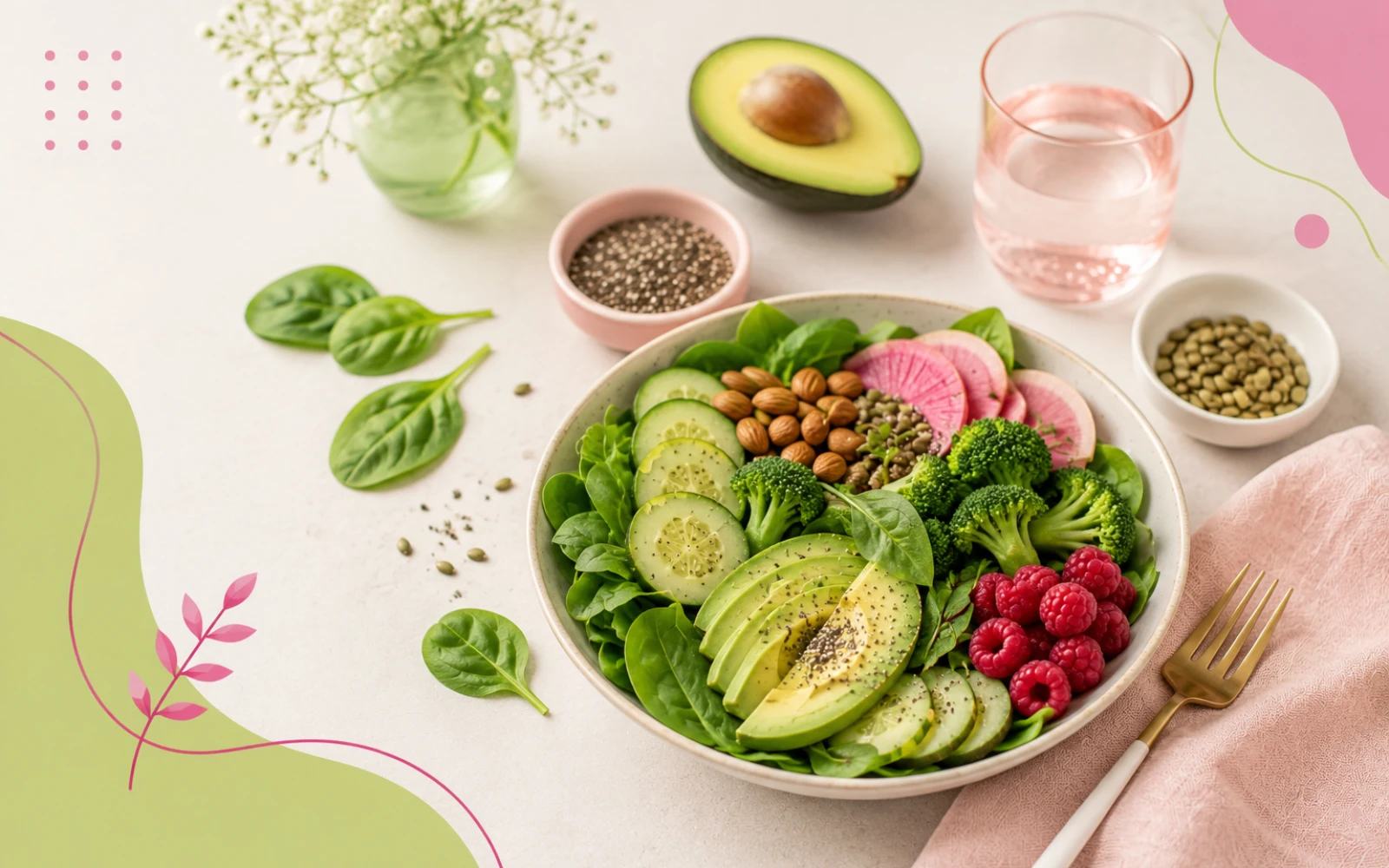
For example, breakfast could include eggs with spinach and avocado. Lunch could combine grilled chicken with mixed greens, cucumber, and seeds. Dinner could include salmon with roasted broccoli, cauliflower, and a side of avocado.
This approach makes fiber part of the meal itself rather than something you need to remember to take separately.
▹ A Simple High-Fiber Low-Carb Day
Getting enough fiber does not require complicated recipes. A typical day can include several small sources of fiber that add up across meals.
For breakfast, try eggs with spinach and avocado. At lunch, build a large salad with grilled chicken, leafy greens, cucumber, peppers, and seeds. For dinner, serve salmon or another protein with roasted broccoli, cauliflower, and a side of avocado. A small portion of berries with plain Greek yogurt can work as a snack or dessert.
| Meal | Fiber-Rich Low-Carb Combination |
|---|---|
| Breakfast | Eggs, spinach, avocado, and sautéed mushrooms |
| Snack | Plain Greek yogurt with a small portion of berries and chia seeds |
| Lunch | Grilled chicken salad with leafy greens, cucumber, peppers, and pumpkin seeds |
| Snack | A small portion of almonds or walnuts |
| Dinner | Baked salmon with roasted broccoli, cauliflower, and avocado |
▹ How to Increase Fiber Gradually
If your current diet is low in fiber, increasing your intake suddenly may cause digestive discomfort. A gradual approach can be easier for your digestive system to adapt to.
Start by adding one additional serving of vegetables to a meal. Once that becomes comfortable, add another fiber-rich food such as chia seeds, ground flax, berries, nuts, or avocado.
It is also important to drink enough fluids throughout the day. Water is a simple choice, especially when increasing your intake of fiber-rich plant foods.
- Add vegetables to meals instead of trying to change your entire diet at once.
- Increase portions of fiber-rich foods gradually.
- Rotate different vegetables, seeds, nuts, and berries for variety.
- Drink water regularly throughout the day.
- Pay attention to how your body responds to dietary changes.
▹ Common Mistakes When Increasing Fiber
One mistake is relying entirely on supplements or isolated fiber products while eating very few whole plant foods. Whole foods can provide fiber along with vitamins, minerals, and other beneficial compounds.
Another mistake is choosing highly processed foods simply because they are marketed as “high fiber” or “low-carb.” Always look at the full Nutrition Facts label and ingredient list rather than relying only on front-of-package claims.
It is also easy to forget about portion sizes. Nuts, seeds, and avocado can be nutritious additions to a low-carb diet, but they are relatively energy-dense. Moderate portions can provide benefits without unnecessarily increasing total calorie intake.
▹ Fiber Supplements: Are They Necessary?
Fiber supplements may be useful in some situations, but they should not automatically replace fiber-rich foods. A varied diet can provide different types of fiber along with a broad range of nutrients.
If you are considering a fiber supplement because you consistently struggle to meet your dietary needs, discuss the option with a healthcare professional or registered dietitian. This is especially important if you have digestive symptoms or take medications that may be affected by changes in fiber intake.
For most people, a practical first step is to improve the overall quality and variety of their meals before relying on supplements.
▹ Simple Low-Carb Fiber Meal-Prep Strategy
Meal prep can make it much easier to include fiber-rich foods consistently. At the beginning of the week, wash and prepare vegetables, portion nuts and seeds, and keep convenient protein sources available.
You can also roast a large tray of broccoli, cauliflower, Brussels sprouts, and zucchini. These vegetables can then be combined with chicken, fish, eggs, or other proteins throughout the week.
Keeping berries, avocado, leafy greens, chia seeds, and nuts available makes it easier to build a fiber-rich meal without preparing an entirely new recipe every time.
▹ Fiber and a Sustainable Low-Carb Diet
A low-carb diet does not have to be built around avoiding as many foods as possible. A more sustainable approach is to prioritize nutrient-dense foods and choose carbohydrate sources based on their overall nutritional value.
Vegetables, berries, seeds, nuts, and avocado can provide variety while helping you include more fiber in your diet. Combining these foods with adequate protein and healthy fats can make meals more satisfying and practical for everyday life.
The right amount of fiber and carbohydrates varies from person to person. Your needs may depend on your overall diet, activity level, health status, and individual goals.
▸ Frequently Asked Questions
How can I get enough fiber on a low-carb diet?
Focus on non-starchy vegetables, berries, chia and flax seeds, nuts, seeds, and avocado. Include a variety of these foods throughout the day rather than relying on a single source.
Are vegetables good sources of fiber on a low-carb diet?
Yes. Non-starchy vegetables such as broccoli, cauliflower, spinach, Brussels sprouts, cabbage, zucchini, and asparagus can provide fiber while fitting into many low-carb eating patterns.
Can I eat berries on a low-carb diet?
Many low-carb diets can include moderate portions of berries. Strawberries, raspberries, and blackberries can provide fiber and nutrients while generally containing fewer carbohydrates per serving than many sweeter fruits.
Are chia seeds and flax seeds good sources of fiber?
Chia and ground flax seeds are convenient ways to add fiber to meals. They can be mixed into plain Greek yogurt, smoothies, or other recipes in moderate portions.
Should I take a fiber supplement?
Not necessarily. Whole foods are a useful first choice because they provide fiber together with other nutrients. If you are considering a supplement, discuss your individual needs with a healthcare professional.
Getting enough fiber on a low-carb diet is possible without relying on large portions of grains, legumes, or sugary foods. The key is to make fiber-rich vegetables, berries, seeds, nuts, and avocado regular parts of your meals.
Rather than focusing only on how many carbohydrates a food contains, consider its overall nutritional value. A varied selection of minimally processed plant foods can make a low-carb eating pattern more nutritious, satisfying, and sustainable.
If you currently eat very little fiber, increase it gradually and drink enough fluids. Individual nutritional needs vary, so people with medical conditions, digestive concerns, or specific dietary requirements should consider personalized advice from a qualified healthcare professional or registered dietitian.
Information in this article is for informational purposes and does not replace consultation with a doctor or nutrition specialist. Before changing your diet, consider your individual nutritional needs and health condition.
How to Get Enough Fiber on a Low-Carb Diet