Intermittent fasting focuses on when you eat, but what you choose to eat during your eating window still matters. A shorter eating period does not automatically make meals nutritious, balanced, or satisfying.
The goal is to use the eating window to provide your body with enough protein, vegetables, healthy fats, fiber, fluids, and other nutrient-dense foods. The exact amount and combination will depend on your individual needs, activity level, preferences, and overall eating pattern.
This practical guide focuses on what to eat during an intermittent fasting eating window, including protein sources, vegetables, healthy fats, whole foods, beverages, and simple meal combinations.
▹ Build Your Eating Window Around Balanced Meals
When the eating window is relatively short, it can be tempting to focus only on getting enough calories or simply eating whatever sounds appealing after fasting. A more practical approach is to build meals around several basic food groups.
A balanced meal can include a source of protein, plenty of vegetables or other fiber-rich foods, a source of healthy fat, and an appropriate amount of carbohydrates when they fit your individual eating pattern.
| Food Group | Examples | Why Include It? |
|---|---|---|
| Protein | Eggs, fish, poultry, Greek yogurt, cottage cheese, lean meat | Supports muscle maintenance and helps make meals more satisfying. |
| Vegetables | Leafy greens, broccoli, peppers, zucchini, tomatoes, cauliflower | Provides fiber, vitamins, minerals, and a variety of plant compounds. |
| Healthy fats | Avocado, olive oil, nuts, seeds, fatty fish | Adds flavor and helps make meals more satisfying. |
| Whole-food carbohydrates | Oats, beans, lentils, potatoes, whole grains, fruit | Can provide carbohydrates, fiber, vitamins, and minerals. |
| Fluids | Water, sparkling water, unsweetened tea, black coffee | Helps support normal hydration throughout the day. |
▹ Protein: A Key Part of the Eating Window
Protein is an important part of a balanced eating pattern, particularly for people who exercise regularly or want to support muscle maintenance while managing their overall calorie intake.
Good options include eggs, fish, chicken, turkey, lean beef, Greek yogurt, cottage cheese, tofu, tempeh, beans, and lentils. The best choices depend on your dietary preferences and nutritional needs.
When the eating window is shorter, distributing protein across the meals you do eat can be a practical strategy rather than trying to consume most of it in one large meal.
▹ Best Protein Foods for Intermittent Fasting
| Protein Source | Simple Ways to Use It |
|---|---|
| Eggs | Omelet with vegetables, boiled eggs, or eggs with avocado and whole-grain toast. |
| Greek yogurt | Pair with berries, nuts, and seeds for a quick meal or snack. |
| Fish | Serve with roasted vegetables, salad, potatoes, or whole grains. |
| Chicken or turkey | Add to salads, grain bowls, wraps, or vegetable-based meals. |
| Cottage cheese | Combine with berries, vegetables, seeds, or whole-grain foods. |
| Tofu or tempeh | Use in stir-fries, salads, bowls, or vegetable-based dishes. |
| Beans and lentils | Add to soups, salads, grain bowls, or vegetable-based meals. |
▹ Vegetables: Add Volume and Nutrients
Vegetables can make meals more filling while providing fiber and a wide range of vitamins, minerals, and plant compounds. They are particularly useful when you want meals to feel substantial without relying heavily on highly processed foods.
There is no single “best” vegetable for intermittent fasting. A varied selection of leafy greens, cruciferous vegetables, colorful peppers, tomatoes, zucchini, carrots, mushrooms, and other vegetables can help create a more diverse eating pattern.
Try combining several colors and textures rather than eating the same vegetable every day. Raw salads, roasted vegetables, steamed vegetables, soups, and stir-fries can all work well within an eating window.
▹ Healthy Fats for Satisfying Meals
Healthy fats can add flavor and make meals more satisfying. Useful options include avocado, extra-virgin olive oil, nuts, seeds, and fatty fish such as salmon, sardines, and trout.
Because fats are energy-dense, portion size can still matter if you are managing your calorie intake. A practical approach is to use healthy fats as part of a balanced meal rather than treating them as unlimited foods simply because they are considered nutritious.
▹ Whole Foods and Fiber-Rich Choices
Intermittent fasting does not require a special list of “fasting foods.” The eating window can include a wide variety of minimally processed foods that fit your nutritional needs.
Fiber-rich foods can be especially useful because they can contribute to fullness and support digestive health. Depending on your dietary pattern, these may include vegetables, berries, beans, lentils, nuts, seeds, oats, and whole grains.
If you are not accustomed to eating a lot of fiber, increasing it gradually and drinking enough fluids may be more comfortable than making a sudden major change.
▹ Whole Foods to Keep in Your Kitchen
| Category | Practical Choices | Easy Meal Ideas |
|---|---|---|
| Protein | Eggs, chicken, salmon, tuna, Greek yogurt, tofu | Omelet, salmon bowl, chicken salad, yogurt bowl |
| Vegetables | Spinach, broccoli, peppers, tomatoes, zucchini, carrots | Roasted vegetables, salads, stir-fries, soups |
| Fruit | Berries, apples, oranges, kiwi, bananas | Fruit with yogurt, berries with oats, fruit as part of a meal |
| Healthy fats | Avocado, olive oil, walnuts, almonds, chia seeds | Avocado toast, salad dressing, nuts with yogurt, seed toppings |
| High-fiber foods | Beans, lentils, oats, whole grains, vegetables | Lentil soup, bean salad, oatmeal, grain bowls |
▹ What to Drink During the Eating Window
Water should remain one of the simplest beverage choices throughout the day. During the eating window, you can also include other beverages that fit your overall eating pattern.
Unsweetened tea, sparkling water, milk, or a nutrient-dense smoothie can be appropriate depending on your preferences and nutritional needs. If you are monitoring added sugar or calorie intake, pay attention to sweetened drinks, flavored coffees, syrups, and large portions of juice.
Hydration needs vary between individuals. Activity level, climate, body size, food intake, and other factors can all influence how much fluid you need.
▹ How to Break a Fast With a Balanced Meal
After a longer fasting period, you do not necessarily need a special “detox” meal or a large amount of food. A normal balanced meal can be a practical way to begin the eating window.
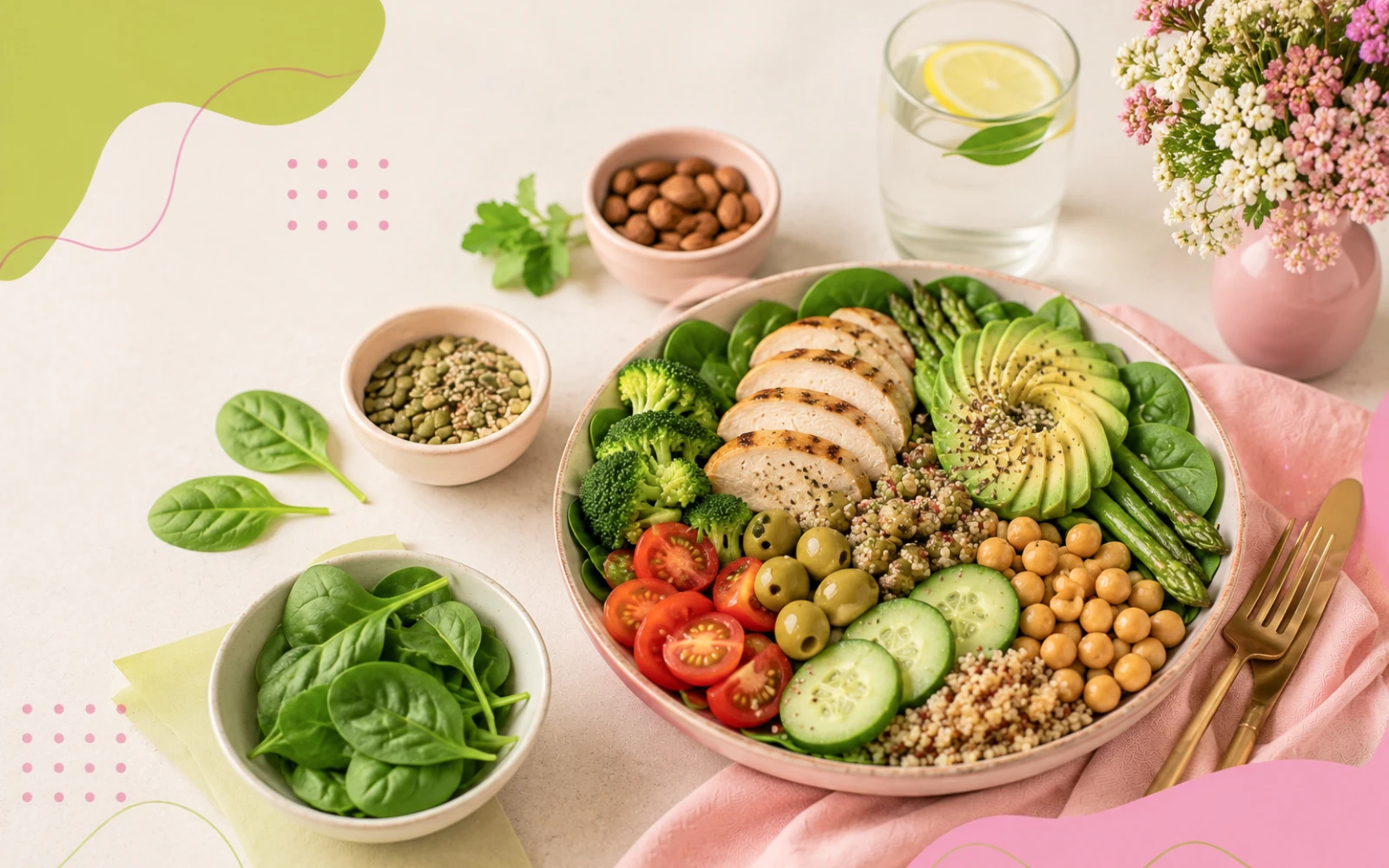
For example, you could combine eggs with vegetables and avocado, Greek yogurt with berries and nuts, or grilled chicken with vegetables and a whole-food carbohydrate source.
If a very large meal after fasting causes bloating or discomfort, try starting with a moderate portion and eating more slowly. Individual tolerance can vary.
▹ Examples of Balanced Meals
A practical intermittent fasting meal does not need to be complicated. The following combinations show how protein, vegetables, healthy fats, and other nutrient-dense foods can be combined into simple meals.
| Meal | Protein | Vegetables or Fruit | Healthy Fat / Other Foods |
|---|---|---|---|
| Breakfast-style meal | Eggs | Spinach, tomatoes, berries | Avocado and whole-grain toast |
| Lunch bowl | Grilled chicken | Mixed greens, cucumber, peppers | Olive oil, avocado, quinoa |
| Fish dinner | Salmon | Broccoli and roasted vegetables | Olive oil and potatoes |
| Vegetarian bowl | Tofu or lentils | Spinach, peppers, broccoli | Tahini and brown rice |
| Quick meal | Greek yogurt | Berries and banana | Walnuts and chia seeds |
▹ Simple Meal Combinations for Busy Days
A shorter eating window can make convenience important. You do not need to cook elaborate meals every day to maintain a balanced eating pattern.
- Greek yogurt bowl: Greek yogurt, berries, chia seeds, walnuts, and a small portion of oats.
- Chicken salad: grilled chicken, mixed greens, tomatoes, cucumber, avocado, and olive oil dressing.
- Egg and vegetable plate: eggs, sautéed spinach, tomatoes, avocado, and whole-grain toast.
- Salmon bowl: salmon, roasted broccoli, greens, avocado, and potatoes or quinoa.
- Lentil bowl: lentils, mixed vegetables, greens, olive oil, and a whole-food carbohydrate source.
▹ How Many Meals Should You Eat During Intermittent Fasting?
There is no universal number of meals that everyone needs to eat during an intermittent fasting schedule. Some people prefer two larger meals, while others feel better with three meals or two meals plus a snack.
The most practical choice depends on the length of your eating window, your calorie and nutrient requirements, your work schedule, and your appetite.
With a longer eating window such as 12/12 or 14/10, it may be easier to fit several meals into the day. With 16/8 or 18/6, some people may prefer fewer but more substantial meals.
▹ What Foods Are Best Limited?
Intermittent fasting does not make any particular food automatically unhealthy or forbidden. However, some foods can make it more difficult to maintain a balanced eating pattern, especially when the eating window is short.
Highly processed foods, sugary drinks, large amounts of added sugar, and meals that provide plenty of calories but relatively few nutrients may leave less room for nutrient-dense foods.
This does not mean you can never enjoy these foods. The bigger picture of your overall eating pattern matters more than one individual meal.
▹ Common Food Choices That Can Backfire
| Less Helpful Approach | Why It May Be a Problem | More Practical Alternative |
|---|---|---|
| Breaking the fast with a very large meal | May cause discomfort or make it harder to recognize fullness. | Start with a balanced, moderate meal and eat slowly. |
| Relying heavily on sugary drinks | Can add calories and sugar without providing much satiety. | Choose water or other low-sugar beverages more often. |
| Eating mostly processed snack foods | May leave less room for protein, fiber, and nutrient-dense foods. | Build meals around protein, vegetables, and whole foods. |
| Skipping protein | Can make meals less satisfying and may make it harder to meet protein needs. | Include a protein source in each main meal. |
| Trying to compensate for fasting | Can encourage overeating during the eating window. | Eat balanced meals based on your normal nutritional needs. |
▹ Eating for Exercise and Recovery
If you exercise regularly, your eating window should allow enough opportunity to support training and recovery. Protein, fluids, and sufficient overall energy intake can be especially important for active individuals.
The timing of meals around exercise can be adjusted according to when you train and how you feel. Some people prefer exercising near the end of their fasting period, while others perform better after eating.
If fasting consistently reduces workout performance, causes excessive fatigue, or makes it difficult to meet nutritional needs, a less restrictive eating schedule may be more practical.
▹ Meal Planning for a Short Eating Window
Meal planning can make intermittent fasting easier, especially with schedules such as 16/8 or 18/6. When you know roughly what you will eat ahead of time, it becomes easier to include enough protein, vegetables, fiber, and other nutrients.
A simple strategy is to prepare a few basic ingredients in advance. Cooked chicken or fish, hard-boiled eggs, roasted vegetables, washed greens, cooked grains, beans, and ready-to-eat fruit can make balanced meals much easier to assemble.
You can also keep convenient foods such as Greek yogurt, nuts, canned tuna, frozen vegetables, and pre-washed salad greens available for busy days.
▹ A Simple Formula for Building Your Meals
If you are unsure what to put on your plate, start with a simple structure rather than trying to follow a complicated meal plan.
- Choose a protein source.
- Add a generous serving of vegetables or other fiber-rich foods.
- Include a source of healthy fat.
- Add whole-food carbohydrates if they fit your dietary pattern and energy needs.
- Choose water or another appropriate beverage.
This approach is flexible enough to work with different cuisines, dietary preferences, and intermittent fasting schedules.
▹ How to Make Intermittent Fasting More Sustainable
The most useful food choices are the ones you can realistically continue eating over time. You do not need to create a completely different diet simply because you have started intermittent fasting.
Focus on meals you enjoy, keep nutritious foods available, and adjust portions according to your individual needs. If your eating window is too short to eat comfortably or consistently, consider using a longer eating window rather than forcing a more restrictive schedule.
Intermittent fasting works best as part of a sustainable eating pattern rather than as a reason to create unnecessary food rules.
▸ Frequently Asked Questions
What should I eat first after intermittent fasting?
A balanced meal containing protein, vegetables or fruit, healthy fats, and other nutrient-dense foods can be a practical choice. There is no universal food that everyone needs to eat first.
Can I eat carbs during intermittent fasting?
Yes. Intermittent fasting does not automatically require a low-carbohydrate diet. Foods such as oats, potatoes, beans, lentils, fruit, and whole grains can fit into a balanced eating pattern depending on your individual needs and preferences.
Should every meal contain protein?
Including a protein source in main meals can be a practical way to help meet your overall protein needs. The ideal amount varies depending on factors such as body size, activity level, age, and individual goals.
Can I drink coffee during intermittent fasting?
Black coffee is commonly consumed during fasting because it contains very few calories. Adding milk, cream, sugar, or syrups changes the nutritional content of the drink. People who are sensitive to caffeine may also prefer to limit coffee.
What should I avoid eating after a fast?
There is no universal list of forbidden foods. However, very large meals, excessive amounts of sugary foods, or highly processed foods may be less comfortable or leave less room for nutrient-dense choices. A balanced meal is often a more practical option.
How many meals should I eat during a 16/8 schedule?
There is no fixed requirement. Some people prefer two substantial meals, while others prefer three meals or two meals plus a snack. Choose an approach that allows you to meet your nutritional needs comfortably.
What you eat during intermittent fasting matters just as much as creating a schedule you can realistically maintain. Build your meals around protein, vegetables, healthy fats, fiber-rich foods, and other nutrient-dense whole foods.
Keep your approach practical. A balanced meal does not need to be complicated, and you do not need special fasting foods or restrictive rules. Simple combinations such as eggs with vegetables and avocado, Greek yogurt with berries and nuts, or chicken with vegetables and whole-food carbohydrates can work well within different eating windows.
The best food strategy is one that supports your nutritional needs, fits your lifestyle, and allows you to maintain a balanced eating pattern over time.
Information in this article is for informational purposes and does not replace consultation with a doctor or nutrition specialist. Before changing your eating pattern, consider your individual nutritional needs, medications, and health condition.
What to Eat During Intermittent Fasting: A Practical Food Guide