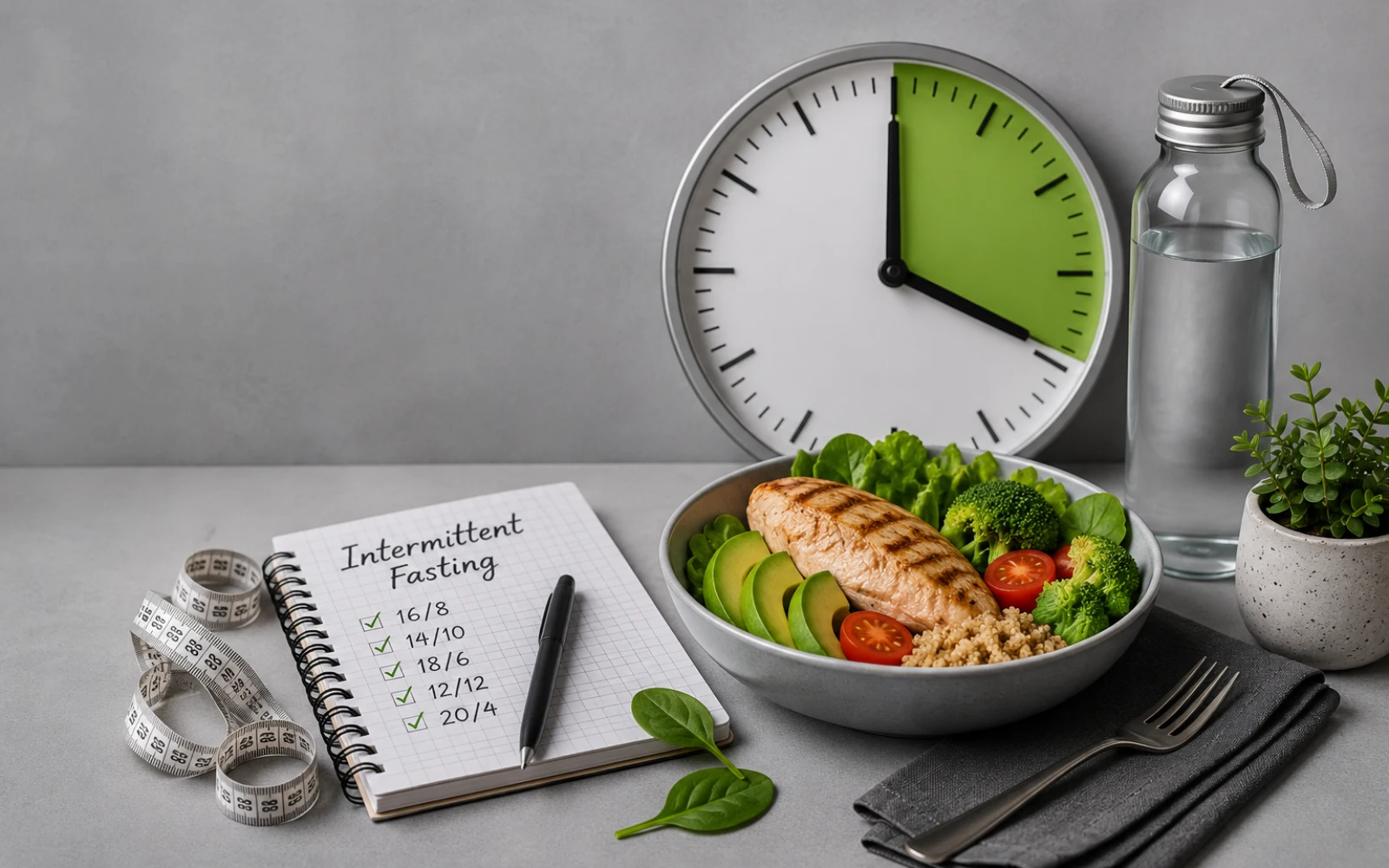
Intermittent fasting is a popular approach to structuring nutrition based on alternating periods of eating and fasting. Unlike many diets, it does not require strict calorie counting or eliminating favorite foods. The main focus is on meal timing and following a consistent eating schedule.
Today, intermittent fasting attracts people who want to create a more organized eating pattern, reduce random snacking, and build healthier habits. Thanks to the flexibility of different methods, it can be adapted to almost any lifestyle.
▹ What is intermittent fasting
Intermittent fasting is based on eating within a specific time window during the day, while fasting during the remaining hours and consuming only zero-calorie beverages.
There are several popular fasting protocols that differ in the length of the eating window.
▹ Popular intermittent fasting schedules
| Schedule | Eating window | Fasting window | Notes |
|---|---|---|---|
| 12/12 | 12 hours | 12 hours | Suitable for beginners |
| 14/10 | 10 hours | 14 hours | Gentle transition into fasting |
| 16/8 | 8 hours | 16 hours | The most popular method |
| 18/6 | 6 hours | 18 hours | For more experienced users |
| 20/4 | 4 hours | 20 hours | Requires strong discipline |
▹ Why intermittent fasting became popular
One of the main advantages of intermittent fasting is its simplicity. Instead of complex rules and constant calorie tracking, people follow a structured eating schedule.
Many people report that this approach helps reduce snacking, improve meal organization, and encourage more mindful food choices. In addition, intermittent fasting can easily be combined with other dietary styles, including low-carb nutrition and general healthy lifestyle principles.
▹ Which foods to choose
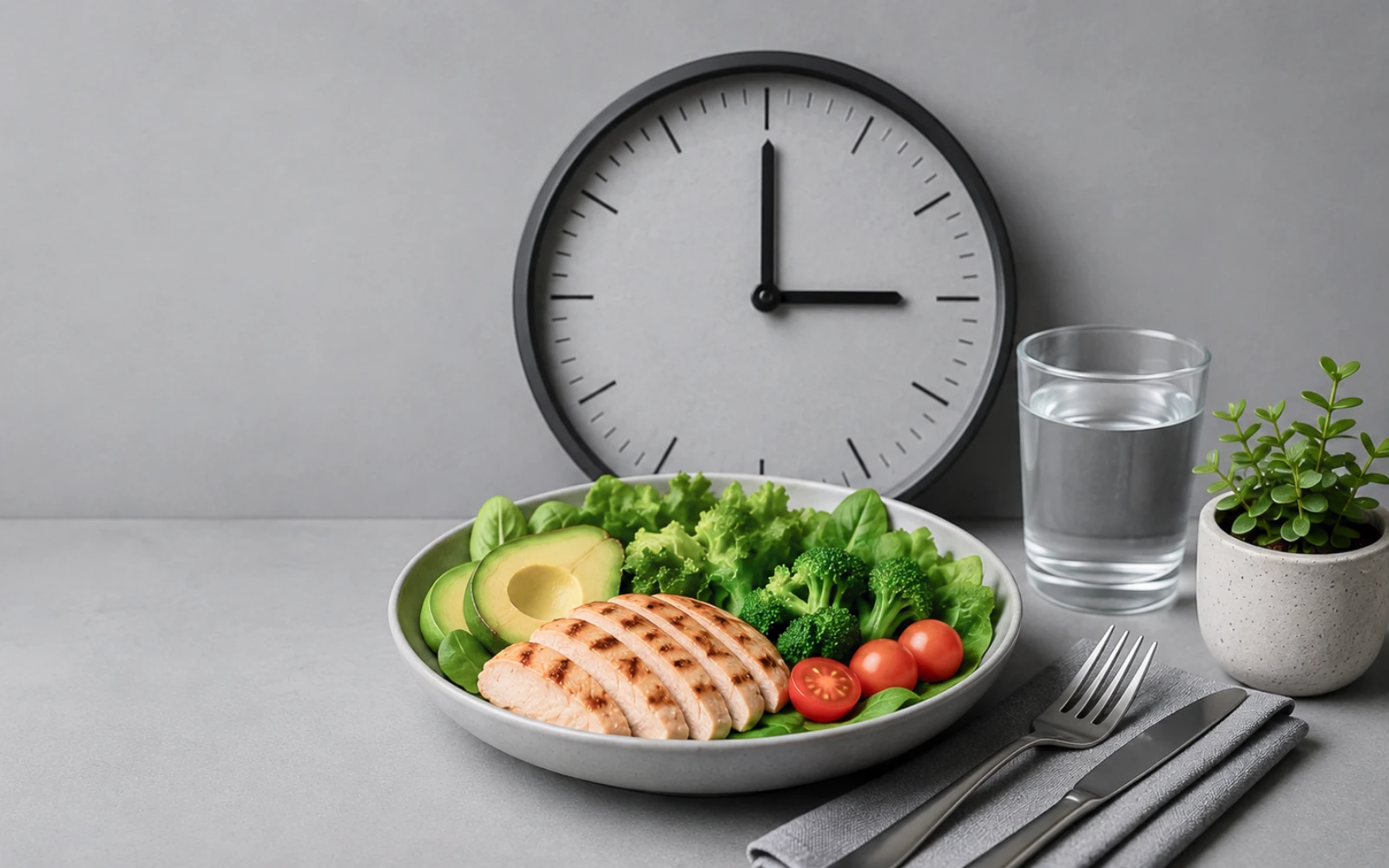
Although intermittent fasting focuses on meal timing, diet quality remains an important factor. To support energy and overall well-being, it is recommended to choose natural, nutrient-dense foods.
▹ Foods for a balanced diet
| Category | Examples | Main benefits |
|---|---|---|
| Protein foods | Eggs, fish, chicken, turkey | Promote long-lasting satiety |
| Vegetables | Broccoli, spinach, cucumbers, cabbage | Source of fiber and vitamins |
| Healthy fats | Avocado, nuts, olive oil | Support satiety and energy balance |
| Fruits and berries | Apples, blueberries, strawberries | Rich in antioxidants and vitamins |
| Drinks | Water, green tea, black coffee | Support hydration and metabolism |
▹ Tips for beginners
It is recommended to start intermittent fasting gradually. For most people, the 12/12 or 14/10 schedule is the best starting point, allowing the body to adapt without stress.
It is also important to maintain proper hydration, prioritize quality sleep, and stay physically active. These factors play a key role in building a healthy lifestyle and making it easier to follow an intermittent fasting routine.
Intermittent fasting is a modern and flexible way of organizing nutrition that helps create a more structured and mindful eating pattern. With different schedules available, anyone can choose a suitable approach and gradually integrate it into daily life. Combined with a balanced diet, physical activity, and proper rest, intermittent fasting can become part of long-term healthy habits and overall well-being.
Intermittent Fasting: How This Popular Eating Pattern Works