Daily sun protection is one of the most important habits for maintaining healthy-looking skin over time. Ultraviolet (UV) radiation can contribute to sunburn, premature skin aging, uneven pigmentation, and other forms of skin damage.
Choosing the right sunscreen can be confusing because products come in different SPF levels, formulations, textures, and active ingredients. Understanding what SPF means, how mineral and chemical sunscreens differ, and how much product to apply can make everyday sun protection easier.
This guide explains how to choose the best sunscreens for everyday use based on your skin type, lifestyle, and personal preferences.
▹ Why daily sun protection matters
UV exposure occurs not only during beach trips or summer vacations. Everyday activities such as walking, driving, gardening, exercising outdoors, and spending time near windows can contribute to cumulative sun exposure.
Regular sunscreen use can help protect exposed skin from UV radiation and reduce the risk of sunburn. It is also an important part of a healthy-aging skincare routine because long-term UV exposure contributes to visible signs of premature skin aging.
For everyday use, dermatology organizations generally recommend choosing a broad-spectrum sunscreen. Broad-spectrum products are designed to protect against both UVA and UVB radiation.
- UVA rays: Associated with skin aging and can contribute to long-term skin damage.
- UVB rays: A major cause of sunburn and also contribute to skin cancer risk.
- Broad-spectrum protection: Helps protect against both UVA and UVB radiation.
Sunscreen works best as part of a broader sun-protection strategy. Seeking shade, wearing protective clothing, and using hats and sunglasses can provide additional protection when spending time outdoors.
▹ SPF explained: what the number really means
SPF, or Sun Protection Factor, primarily indicates how well a sunscreen protects against UVB radiation under standardized testing conditions. A higher SPF generally provides greater protection, but no sunscreen blocks 100% of UV radiation.
For everyday use, SPF 30 or higher is commonly recommended. The important point is that SPF does not mean you can stay in the sun indefinitely. Sunscreen needs to be applied correctly and reapplied when necessary.
| SPF Level | General Meaning |
|---|---|
| SPF 15 | Provides basic UVB protection but offers less protection than higher SPF products. |
| SPF 30 | Provides high UVB protection and is a practical choice for everyday use. |
| SPF 50 | Provides very high UVB protection and may be useful for prolonged outdoor exposure. |
| SPF 50+ | Provides very high protection when applied correctly and as directed. |
It is important to understand that SPF numbers do not increase protection in a perfectly linear way. SPF 30 does not provide twice as much protection as SPF 15, and SPF 100 does not provide twice as much protection as SPF 50.
More important than choosing the highest possible number is using enough sunscreen, applying it consistently, and reapplying it when needed.
▹ Mineral vs. chemical sunscreen
Sunscreens are commonly divided into mineral and chemical formulations based on their active ingredients. Both types can provide effective UV protection when properly formulated and used according to their instructions.
Mineral sunscreens typically use active ingredients such as zinc oxide or titanium dioxide. They are often chosen by people with sensitive skin because they can be a suitable option when certain chemical sunscreen ingredients cause irritation.
Chemical sunscreens use organic UV filters that absorb UV radiation. Modern formulations are available in lightweight lotions, gels, sprays, and other textures that can be comfortable for everyday use.
| Feature | Mineral Sunscreen | Chemical Sunscreen |
|---|---|---|
| Common active ingredients | Zinc oxide, titanium dioxide | Various organic UV filters |
| Texture | Can sometimes feel thicker or leave a visible cast | Often available in lightweight, fast-spreading formulas |
| Sensitive skin | May be preferred by some people with sensitive skin | Some formulations may cause irritation in sensitive individuals |
| Daily use | Can be used every day | Can be used every day |
There is no universally "best" type of sunscreen for everyone. The best product is one that provides broad-spectrum protection, has an appropriate SPF, suits your skin, and feels comfortable enough that you will use it consistently.
▹ Sunscreen for face, body, and sensitive skin
The best sunscreen is one that fits the area of the body you are protecting and feels comfortable enough for regular use. Facial sunscreens are often designed with lighter textures, while body sunscreens may be available in larger lotions, creams, or sprays.
For the face, look for a sunscreen that works well with your skin type and does not feel excessively greasy or irritating. Some facial products are also formulated to work well under makeup or with other skincare products.
People with sensitive skin may prefer fragrance-free formulas and mineral sunscreens containing zinc oxide or titanium dioxide. However, sensitivity varies from person to person, so checking the full ingredient list and testing a new product carefully can be helpful.
- Face: Choose a comfortable, non-irritating formula that fits your daily skincare routine.
- Body: Larger-size lotions, creams, and sprays can make regular application more convenient.
- Sensitive skin: Consider fragrance-free products and simple formulations.
- Outdoor activities: Look for water-resistant sunscreen when appropriate and follow the product's reapplication instructions.
▹ How much sunscreen should you use?
Using enough sunscreen is just as important as choosing the right SPF. Applying too little can significantly reduce the level of protection indicated on the product label.
For the face and neck, many people find the "two-finger" method useful: apply enough sunscreen to cover the length of two fingers. For the entire body of an average adult, about one ounce, or enough to fill a shot glass, is a commonly used guideline.
Apply sunscreen generously to all exposed areas, including commonly missed spots such as the ears, neck, tops of the feet, and backs of the hands.
Sunscreen should generally be applied before going outdoors according to the product directions. Reapplication is important, particularly after swimming, sweating, toweling off, or during extended outdoor exposure.
▹ Common sunscreen-buying mistakes
Choosing sunscreen based only on the SPF number can lead to a product that does not fit your actual needs. Comfort, broad-spectrum protection, water resistance, skin compatibility, and regular use are all important factors.
Another common mistake is buying a product that feels unpleasant on the skin and then avoiding it. A slightly lower SPF product that you apply correctly and consistently may be more useful in everyday life than a product you dislike using.
- Choosing SPF without checking broad-spectrum protection: Look for protection against both UVA and UVB radiation.
- Applying too little: Use enough product to adequately cover exposed skin.
- Forgetting to reapply: Reapply according to the product directions, especially after swimming or sweating.
- Ignoring the ears and neck: These areas are often missed during application.
- Using expired sunscreen: Check the expiration date and storage instructions.
- Buying based only on marketing: Focus on SPF, broad-spectrum protection, formulation, and how well the product suits your skin.
▹ What to look for when choosing everyday sunscreen
When comparing sunscreens, a simple checklist can make the decision easier. Look for broad-spectrum protection, SPF 30 or higher, a formulation that suits your skin, and a texture you will actually enjoy using.
If you spend significant time outdoors, consider whether you need water resistance and a formula designed for physical activity. For everyday commuting or short periods outdoors, a comfortable facial sunscreen may be the easiest option to incorporate into your routine.
▸ Frequently Asked Questions
What SPF is best for everyday use?
SPF 30 or higher is a practical choice for everyday sun protection. Look for broad-spectrum protection and apply the product generously according to the label directions.
Is SPF 50 better than SPF 30?
SPF 50 provides greater UVB protection under standardized testing conditions, but correct application and regular reapplication are essential regardless of the SPF number.
Which sunscreen is better for sensitive skin?
Some people with sensitive skin prefer fragrance-free mineral sunscreens containing zinc oxide or titanium dioxide. Individual tolerance varies, so choose a formula that feels comfortable and does not cause irritation.
How often should sunscreen be reapplied?
Reapply according to the product directions and after swimming, sweating, or toweling off. More frequent application may be needed during prolonged outdoor exposure.
Can sunscreen help prevent premature skin aging?
Regular sun protection can help reduce cumulative UV exposure, which is an important contributor to premature visible skin aging. Sunscreen works best alongside shade, protective clothing, and other sun-safe habits.
Choosing the best sunscreens for everyday use is less about finding the highest SPF available and more about finding a broad-spectrum product that fits your skin, lifestyle, and daily routine. SPF 30 or higher, adequate application, and regular reapplication can help provide consistent protection from UV exposure.
Whether you prefer a mineral or chemical formula, the most useful sunscreen is one that feels comfortable enough to use consistently. Combined with shade, protective clothing, hats, and sunglasses, daily sunscreen can become a simple and valuable part of a long-term healthy-aging skincare routine.
Information in this article is for informational purposes and does not replace consultation with a doctor or qualified dermatologist. If you have specific skin concerns, allergies, or a history of skin conditions, consider discussing sunscreen choices with a dermatologist.
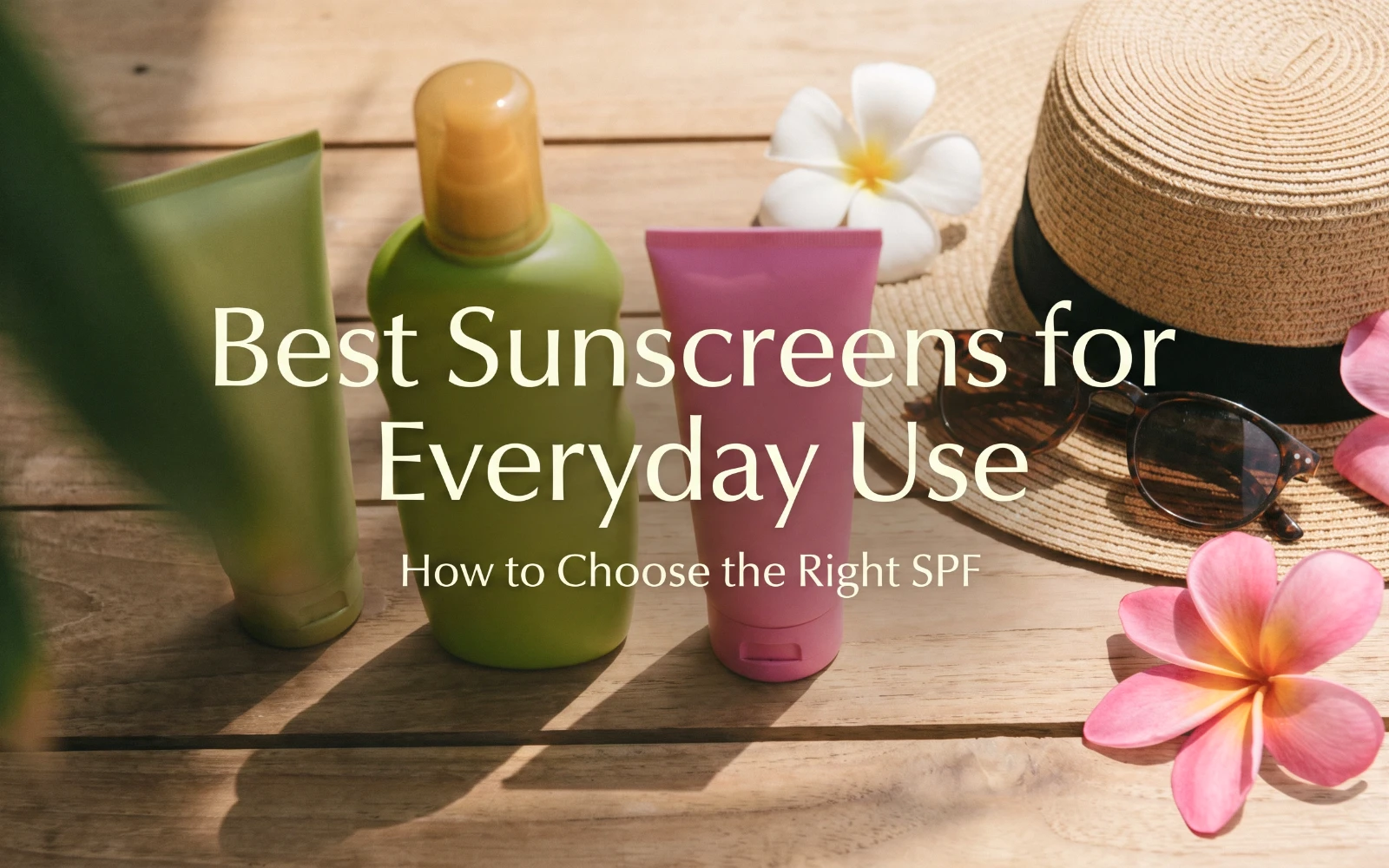
Best Sunscreens for Everyday Use: How to Choose the Right SPF